
Wednesday, November 30th 2022
Selling, Buying, and Bartering
What are the issues?
By Jessica Beavin and Maria Armstrong
In general, any bartering puts a price on human milk. We may not think of it as such when offering pump parts since we are not giving money, but bartering when practicing milksharing is essentially commodifying private exchanges of human milk.
Commodification is putting a price on things that shouldn't have a price. The Eats on Feets network is for the donation of human milk only. Full stop. We allow bag-for-bag (or bottle) replacement on our network as the one and only exception, but it must be clear that this is not a requirement. We ask our community members to be mindful of this when posting. We, Eats on Feets, simply ask donors to give their extra milk freely and for recipients to be thankful and respectful of their donors. Not everyone is in a position to be able to buy bag or bottle replacements for a donation so when this is added to an offer, someone in need may be discouraged to respond. Likewise, a donor may skip over a request from someone who cannot buy replacement bags. This can mean one less baby obtaining human milk when even one feed a day can be so important.
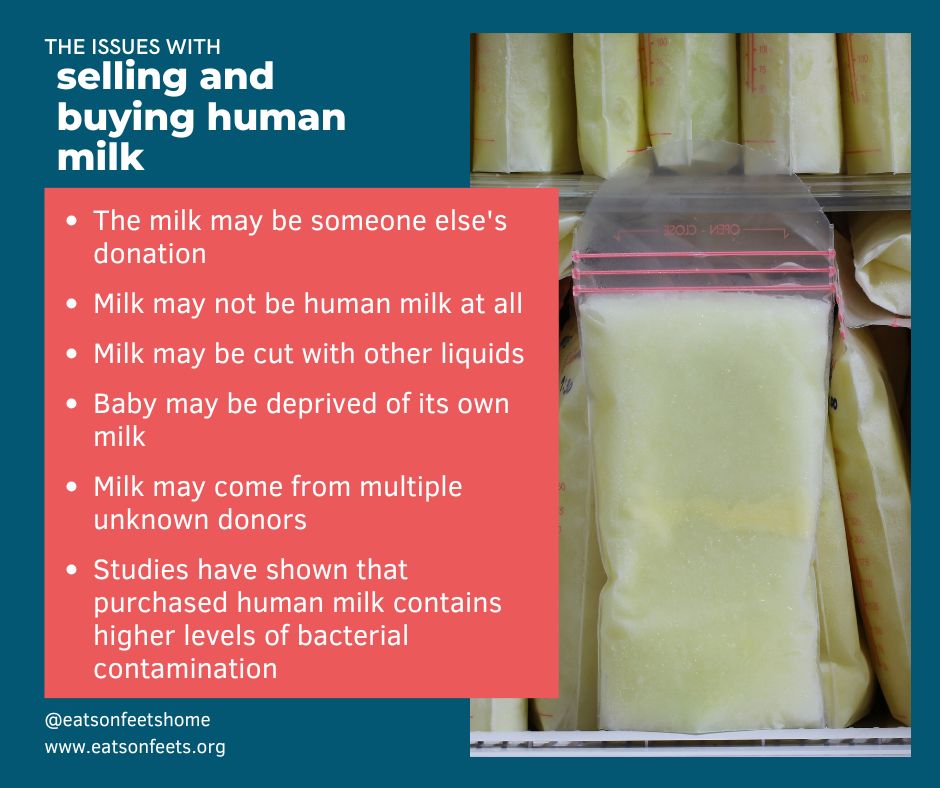
The commodification of private arrangement human milk adds serious ethical issues to the safety of community-based milksharing. Some issues are:
- The milk may be someone else's donation
- The milk may not be human at all
- The milk may be cut with other liquids
- The milk may come from multiple unknown donors
- A baby may be deprived of its own milk when a family is on government assistance and receives formula for their baby
- Studies have shown that purchased human milk contains higher levels of bacterial contamination
In our experience, some specific issues with bartering pump parts are:
- Kits are expensive, ranging from $20 to $50-60USD
- Individual items can be expensive, ranging from $3 to $50USD for some parts
- Given pump parts are sold instead of being used
- "Pump parts" is vague and can mean a lot of things, including being code for money
Below is a chart of parts compiled by Jessica, one of our admins and mentors.
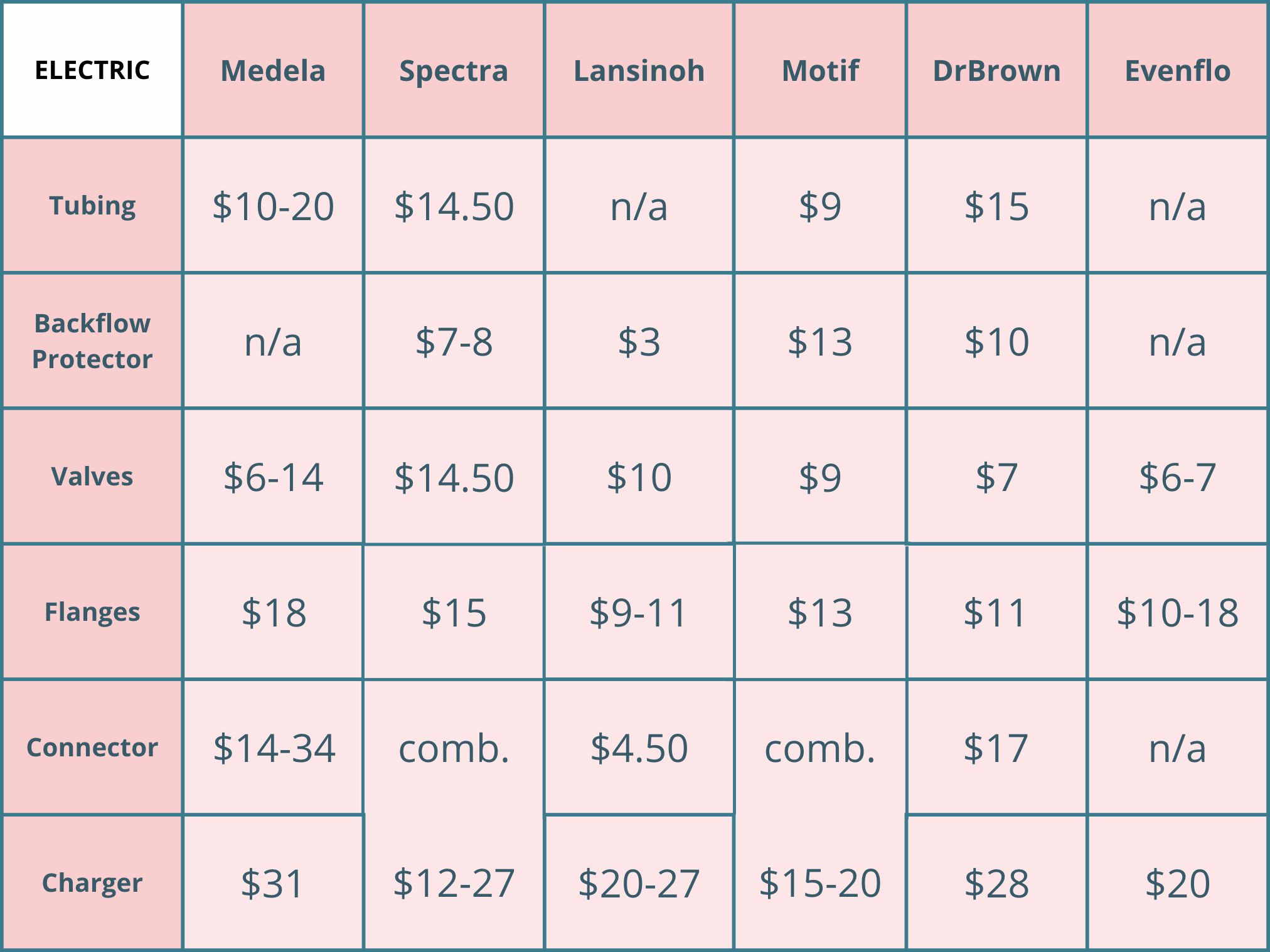
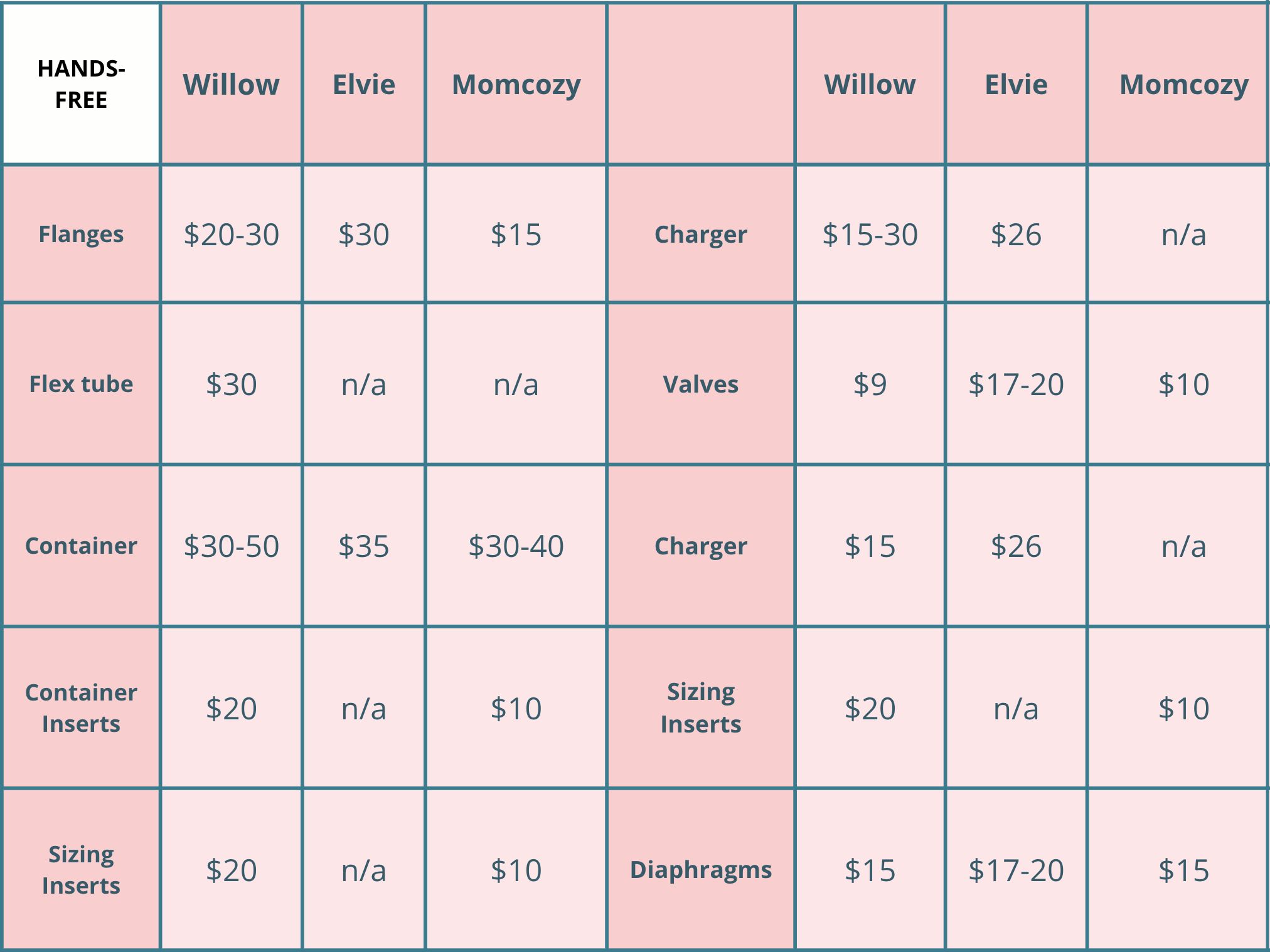
Some parts need to be replaced every few weeks, others every few months.
When someone offers "pump parts" what does this mean? Do people who have never pumped even know or are they just participating in an assumed culture, figuring they'll just give money? Is someone expecting a valve? Two valves? Valves for their sister? A battery? A whole kit? A pump? What is a recipient to do if three donors want pump parts for just a few ounces? How many ounces for what parts is OK? What is the exchange rate? It is impossible, nor do we want to put parameters around this. Any bartering puts undue pressure on parents looking for milk for their baby and donors will potentially disregard families who can't play the part.
Our guidelines are clear and all posts asking for or offering pump parts or anything other than bag-for-bag (or bottle) replacement are removed from our pages and groups. Members may or may not receive a notification about this, depending on the format of the chapter (page or group) and the availability of the admin of a chapter.
Other milksharing places may allow members to request or offer pump parts, or other items, or allow selling and buying in their milksharing spaces. We do not. This does not mean that we dictate what arrangements people can make together privately, especially when there is a long-term donor-recipient relationship. We simply protect our spaces and the way offers and requests are made on our network.
One of our main motivations for this is that Eats on Feets aims to remove socio-economic barriers to accessing human milk. It is our hope that all babies have access to free human milk. We are also mindful of barriers that donors may have in order to donate their extra milk. Bags and pump parts add up. Reusable containers are an option as well as other ways of expressing milk. When someone has a good supply, which donors have, hand expression is very efficacious. Using passive collection and pressure collection with a jar are also great methods. Pumps have a place, certainly, but pump companies are making the same huge profits over our nipples as formula companies do.
If you are new to milksharing through Eats on Feets, welcome! Please acquaint yourself with our guidelines. Even if you are not new to milksharing, it is important to keep using discernment when practicing community-based milksharing. Our guidelines were developed to promote safety and equity within our communities and we have operated within these parameters since 2010 when we started making ripples.
Bios
Jessica is a stay-at-home mom of 3 and full time student to become a Child Life Specialist. Jessica was able to give her twins breastmilk for 3 years thanks to her awesome donors. She joined the Eats on Feets team in 2019.
Maria Armstrong came to us from The Netherlands and is the mother of 4. She is a childbirth educator and a doula serving the Portland, OR and Vancouver, WA metro areas since 2007. She is a strong advocate for the self-determination of families wherever she finds herself. Her favorite spot is anywhere on the Oregon Coast.