Tuesday August 25th, 2020
An interview with Michelle Ivette Ponce, Traditional Healer, Community Organizer, and Performance Artist and Lakisa Muhammad, Midwife, Educator.
In honor of Black Breastfeeding Week (August 25-31)
By Shell Walker Luttrell, Founder of Eats on Feets
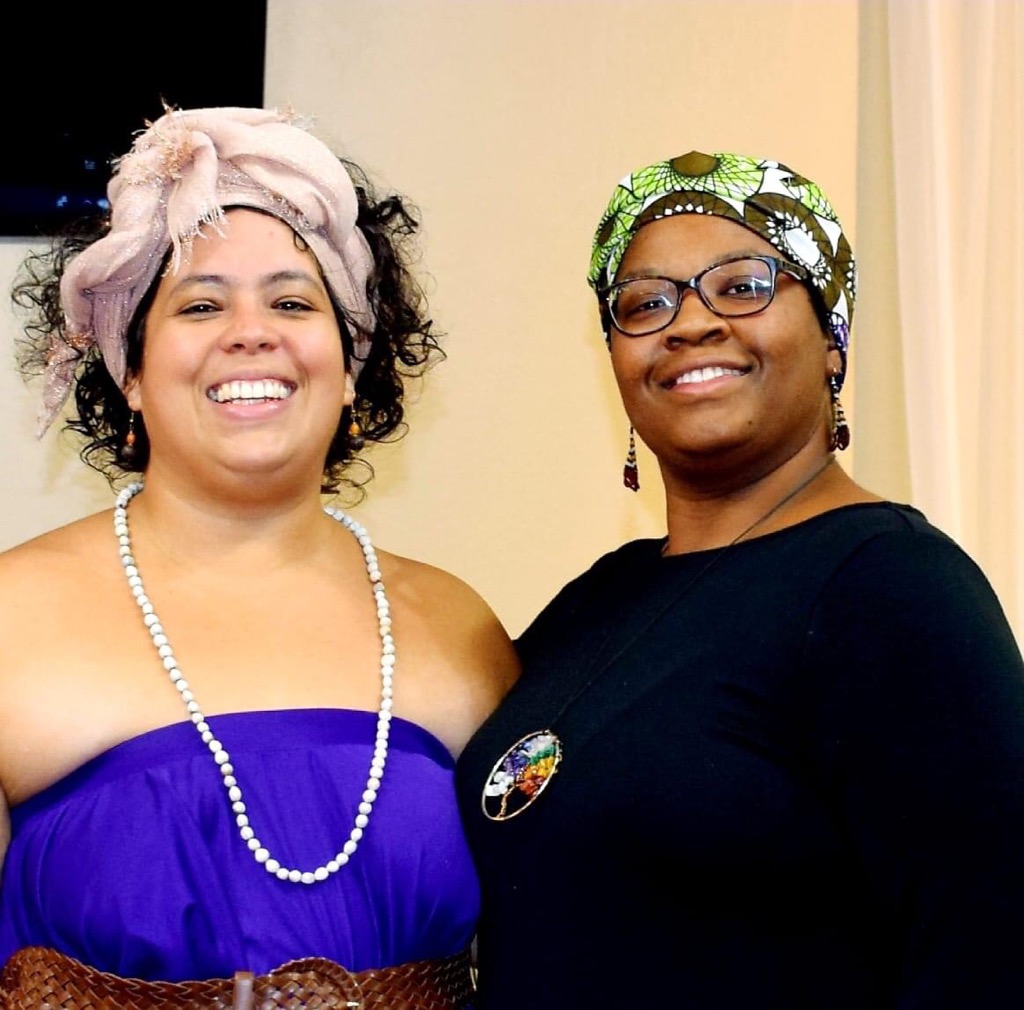
Hey Michelle! Hey Lakisa! Thank you for taking the time to talk with me. I know that you are both busy with your many projects. Your time means a lot to me!
Michelle: Thank you for having us. It's an honor to be inspired by your work and legacy!
Lakisa: Hey Shell! I always have time for you. And thank you for allowing us space on your platform to discuss this very important topic.
It's Black Breastfeeding Week this week!!! Yeeeees! Tell me about your personal breastfeeding experience?
Michelle: Breastfeeding saved my life! After experiencing a traumatic birth and postpartum period, breastfeeding gave my son and I the peace and strong foundation to survive and keep sane. It healed me. I just weaned him at 5 (5!) years old. What an epic journey!
Lakisa: I was a 18 year old college student when I first physically saw someone breastfeed. I remember thinking, "Oh that's breastfeeding. That's how you do it. I'm going to do that for my children." I successfully breastfed all 3 of my children, including twins, for 1 year and my youngest for almost 3 years. I did not have much family support. While my husband is now a lactivist in his own right, he even admitted he doubted me in the beginning. I took every breastfeeding class I could and read all the books. With my twins, I had access to lactation support through the hospital, and they were great. I'm proud of myself for breastfeeding. I set a goal and with determination, I achieved. I don't know what it would feel like otherwise, but I also believe that the bond I created with my children through breastfeeding made me a better mother.
For those in our audience who are new to this event: Why is Black Breastfeeding week necessary?
Michelle: Because Black parents are isolated and need support when it comes to birth and breastfeeding. The community is still learning and remembering about the benefits of breastfeeding so they can provide a nurturing environment for breastfeeding families. And we know that the benefits of breastfeeding increase the wellbeing and health of both parents and infants so it's a perfect way to combat the crisis of sickness and death surrounding Black births.
Lakisa: For those in the audience who don't know, breastmilk for Black babies is not a nicety. It is life-saving considering all the other obstacles we are up against, especially in regards to prematurity and NICU care. There was a report released just this week stating that Black babies are 3 times more likely to die if the doctor providing care for them is white. Ironically, mortality rates for white babies was not affected by the doctor's race. The very least we can do is give Black babies breast milk. So to do that we must overcome the many barriers Black mothers face in achieving a successful breastfeeding relationship. Some of those barriers include lack of education, lack of addressing the historical context of slavery and wet nursing, and lack of support on familial, social, and professional levels. Black Breastfeeding Week seeks to spotlight and explore solutions to mitigate these barriers to breastfeeding success for Black families.
Lastly, BBW is a celebration! We are encouraging and uplifting all the families who beat the odds, some by their own sheer will to say, "I am breastfeeding my baby!" And they did! Those families deserve praise from their community, and BBW is one vehicle we can use to say, "We see you."
Tell me a little bit about how Black Breastfeeding Week works in terms of the national organization and the local events.
Michelle: Nationally, it's the 8th year that the Black Breastfeeding Week organization puts together a theme and hashtag to unite national events and efforts around the week. By streamlining language and focus, we join the national movement through our local events. The national organization also shares the logo for local organizers to utilize in marketing campaigns.
Lakisa: It's been amazing to see the increase in participation over the years. The first year that I organized an event here in Phoenix in 2016, which is how Michelle and I met, there were maybe 3-4 cities that participated. Now imagine the joy of seeing BBW flyers on Instagram and Facebook from all over the country. The movement is growing.
What do you think are some of the most important actions that the local community can take to increase Black breastfeeding rates?
Michelle: The local businesses and organizations can sign on to a pledge to support and encourage breastfeeding in and around their entities, including providing clean private spaces and also train their personnel on local laws. They can support breastfeeding when happening in their spaces by defending and protecting the breastfeeding parent's right to breastfeed openly. Breastfeeding should also be an integral part of any childbirth education or advocacy measures. And providers and health care organizations need to invest in funding more Black people to get certified as IBCLCs.
Lakisa: We are facing a serious problem in our state with the lack of Black lactation consultants. We have a couple, but they work for medical facilities which by nature insulates them from the community. Black women are not getting culturally competent care in hospitals. Once they go home, they are no Black lactation consultants who can come into the home and support. This is the same for Black women who birth at home: if the scope of their issues is beyond the knowledge of their Black midwife or doula, there is no Black IBCLC to call. There are also no Black La Leche League leaders or Black Breastfeeding USA groups. There are no grassroots Black breastfeeding support groups. We need systems in place to support, train, and foster Black IBCLCs in private practice here in Arizona who are ready to serve Black women who have given birth in the hospital, birth center, or home setting. Is anyone in the audience inspired to take on this work? If so, consider this a call to action!
Bios
Michelle Ivette Ponce is a Certified Hypnotherapist, Spiritual Life Coach, and Celebrant. Michelle also is a Performance Artist and Community Organizer, Birthworker/Doula, and Healer. Michelle's success is supporting women to now boldly step into their higher selves by inspiring change, healing trauma, and removing obstacles towards achieving desired goals. Michelle trained at Southwest Institute of Healing Arts as an Integrative Healing Arts Practitioner. She has over ten years of leading and building community and sisterhood through gatherings, ceremonies, events, and performances. With her unique merging of traditional and ancestral wisdom, divine feminine energy, and movement and song, Michelle's voice reaches hearts and minds, calling us to remember to celebrate ourselves and the divinity within. Michelle's vision is in having vibrant, healthy and stable communities that grow and heal through nurturing connections with self, others, and Spirit. Her calling is to support healing in the community, especially women, to live empowered, healthy, and authentic lives with purpose. Michelle is passionate about traditional birthwork, and has trained in traditional birth companion and postpartum support for mothers and families. Growing up in Puerto Rico and New York City, Michelle inherited a passionate and exuberant self-expression that rhythmically celebrates life, community, family, healing and growth. Live drumming, Afro-Caribbean dance and singing, and Afro-diasporic culture and healing informs her enthusiasm for nurturing cultural and self-expression. Michelle offers ceremonies, performs poetry, leads workshops, as well as public speaking. She helps strengthen organizations and connections between birthworkers of color locally, nationally and internationally. Through coalition building and fostering spaces for Black and Indigenous People of Color to be empowered, heard, and healed, Michelle envisions dignity and balanced roles for traditional, spiritual, and emotional wisdom keepers in our communities. She is the co-founder and co-director of Arizona Birthworkers of Color, and currently resides in Phoenix, Arizona with her 5 year old son, Nafari.
Motivated by a passion to help pregnant families experience safe and healthy births, Lakisa Muhammad serves her community as a Certified Professional Midwife and a Licensed Midwife in the state of Arizona. Using her knowledge and training, she works to address and debunk myths and misconceptions, replacing them with facts and timeless traditions that lead to better decision making and better outcomes for birthing families at her practice, A Mother's Worth Birth Services. Lakisa also co-leads Arizona Birthworkers of Color, a group dedicated to uplift, support, and connect birth professionals of Color statewide. When she's not at a birth, Lakisa enjoys spending time with her husband, Dewayne, their 3 children, Amir, Yasina, and Hassana, and the family furbabies Myra and Calvin and 5 chickens. You can find me at amothersworthbirthmidwifery on Facebook and at amothersworth on Instagram. Lakisa also holds space on the web at amothersworthbirthservices.com.