Sunday, May 15th 2022
Infant Formula Shortage
Answers to media questions
By Shell Luttrell and Maria Armstrong
The work of Eats on Feets is to inform and support the safe sharing of human milk. All babies deserve human milk and all families deserve access to safe human milk for their short or long term needs. All families also deserve to be able to set specific criteria for their own needs.
There are many reasons why someone may not be able to fully provide their own milk for their baby. We do not judge families or use any form of hierarchy to determine which babies receive milk through our network. Eats on Feets simply provides a safe space to initiate contact, a website with safety information, and guidelines for using our Facebook chapter pages.
The focus of Eats on Feets is the singular issue of informed community-acquired donor milk for babies in need. Community-acquired to us means direct family-to-family, without intermediaries. To support this focus we have honed and crafted our guidelines over time to adjust to the growing demand and to address unsafe practices around the internet.
When it comes to media coverage and recommendations from organizations like the AAP on supplemental infant feeding, community-based milksharing is often overlooked as a safe and sustainable infant feeding method. This is not only an often purposeful oversight but also irresponsible. Case in point: Most coverage of the current formula shortage as well as official suggestions from most, otherwise, reputable organizations only include where to look for formula, reiterating to not feed home-made formulas, goat or cow's milk, to not dilute, etc. There is typically no mention of the obvious: that families with human milk to feed their own baby can safely help families in need.
We have been inundated with news sources wanting to interview us on the topic of the formula shortage. To date these little sound bites and tiny quote grabs have failed to fully represent Eats on Feets and the issues at hand.
Below we are providing answers to the questions that we have been asked.
Has the formula shortage increased your profits?
Eats on Feets is strictly milk donation based and the network is 100% volunteer-run. There is no exchange of money for milk involved on our network.
Are you busier since the formula shortage started?
It seems that the chapter pages are growing faster and that there are more offers and requests that coincide with the current shortage. We are diligent in upholding our safe space according to our page usage guidelines as well.
How many facilities do you have?
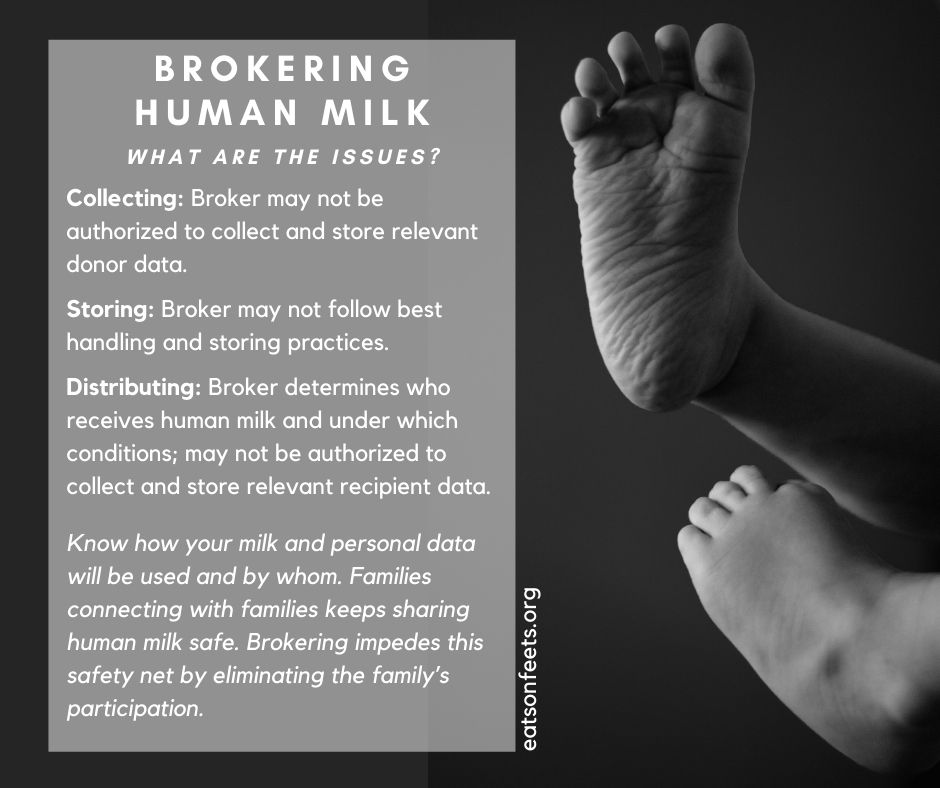
Eats on Feeds does not have a facility. We do not broker human milk. Every household practicing private milksharing is its own facility so to speak and we have no idea how many there are. We only know that there are more than we are aware of.
Who can receive human milk from your network?
Any family in need can request for themselves and any donor can donate to whom they wish. We do not dictate their arrangements but only offer supportive safety information for their own screening and safety processes.
Have any babies become sick from using milk obtained from your network?
We are not aware of any baby getting sick from community-acquired human milk in 12 years of providing this space.
What about the study showing bacterial growth in milk obtained through online sources?
Please see our response to that study here.
Instead of working towards solutions for infant feeding the AAP and Milk Bank owners made the choice to perform and publish a sham study, thereby disempowering families and contributing to the problem that families are now facing. Our hope is that one day they will sit with us so that we can explain to them how our safety guidelines work to support healthy babies.
Has the Eats on Feets network encountered the shaming of parents who cannot or who otherwise choose not to lactate?
Anything to that extent is removed instantly. We have no patience for it. Babies need human milk. Period. That said, the lack of breastfeeding is one of the issues not addressed in current coverage of the formula shortage. Inappropriate and unpaid maternity leave, inadequate support from employers, and lack of access to affordable professional support are to blame. We are barely addressing these issues as a society.
What options do formula-dependent families have?
To also supplement with human milk as possible. Any amount from a healthy donor is good to add for all its known beneficial properties. Many of our community members feed a mix of their own milk, donor milk, and formula. The polarizing mentality of 'breastmilk is best' and 'fed is best' is not for us. Fed is informed and informed absolutely includes community-acquired donor milk. Obviously, there are risks to using formula as well, risks that are not addressed properly. Parents often don't know to use boiled water that has cooled a little for the preparation of formula if their infant is under two months of age.
What can families turning to human milk sharing do to ensure its safety?
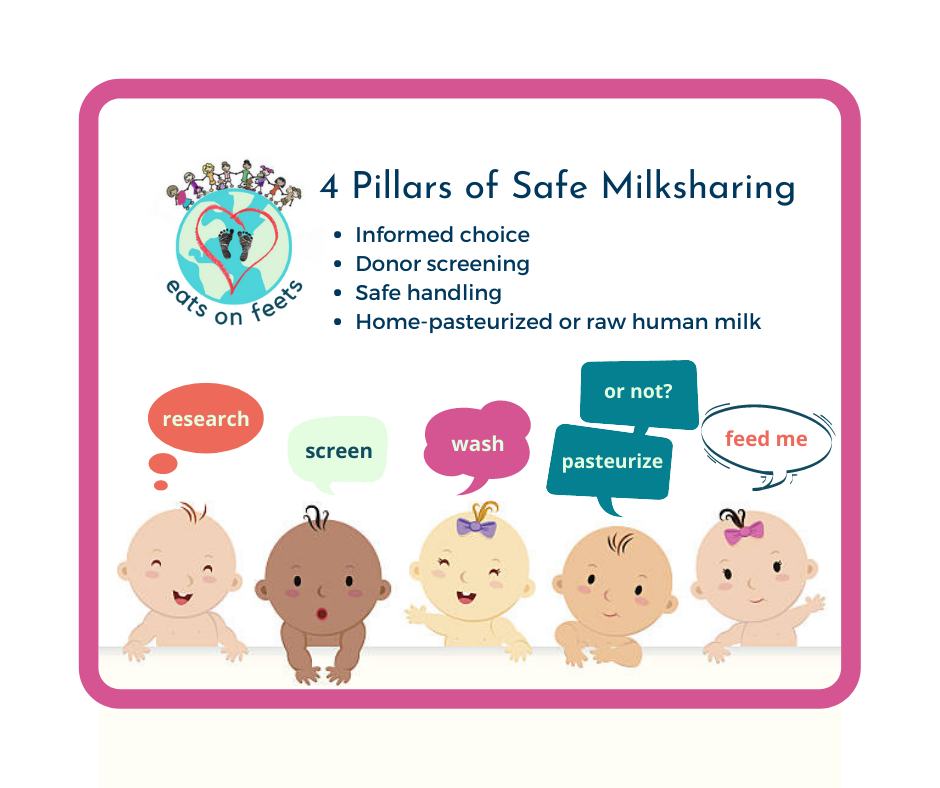
Use the 4 Pillars of Safe Breastmilk sharing to start their informed choice process. The 4 basics are simple and families can decide together what they need and is important to them.
Any family or group can access our safety information for their use without joining or using the network. We only ask to be given credit when our safety information is copied or printed.
Please visit eatsonfeetsresources.org to access the resources for the safe sharing of human milk.