Sunday, July 27 2025
15 Years of Community!
Marking 15 years of community-based milksharing with stories of recipients, donors, and angel babies. Thank you for sharing them with us!
Some of our Wonderful Recipients

My name is Jazmin. I got with this community 4 years ago. My sons Winslow and Huntley have benefit from this community since Winslow was 6months old! I dried up at the surprise pregnancy of Huntley! Then when Huntley was born late preemie at 36 weeks we were back on the community to help build a stock to supply a new born and 17month old! I don't know what I'd do without this community and the mommies that are a part of it! I will always be so grateful! Both my boys were able to make it to 2 years,I will also add that due to the help we got Huntley safely through a positive COVID at only 10 days old!
Jazmin
_______________
I had a mastectomy a few years before my kid was born, and was still able to get him to 10 months exclusively breast milk fed. My new baby is almost 8 months, and she's been maybe 75% donor fed. Very grateful for all the donor parents who got both of them there! (And as a non-binary person, I love that this page makes sure to include me.)
Ryden
_______________
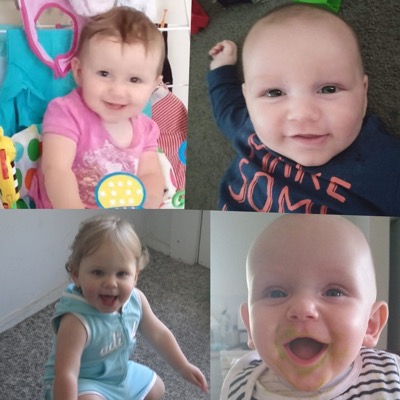
Our families story began twelve years ago as a first-time mum, having a baby born at 32 weeks, a very low breast milk supply, and an IGT diagnosis. As we prepared for discharge eight weeks later, we were told that my little one no longer qualified for donor milk from the milk bank, and we had to transition to formula before discharge. I called out for advice and support in my local community, and my community rallied to our aid, offering their extra milk and recommending that I visit the Eats on Feets website to become informed about community milksharing. The Eats on Feets community and safety information proved to be an invaluable resource as our family grew over the following seven years. We welcomed three more babies who required donor milk and the generosity of our community. All four of my babies were blessed by many donors and were exclusively fed donor milk for 12 months and beyond. Community milk sharing has made an incredible impact on our lives; not only were my children nourished with donor milk, but we have also made lifelong friendships and consider many of our donors to be family. Our experience forged a strong passion inside me to create awareness about community milksharing and support other families in becoming informed about safe community milksharing. I am profoundly thankful for the support, love, and generosity extended to us, I will persist in promoting donor milk as a primary option to supplement one's own milk supply and support safe community milksharing for as long as I can.
Erin, EOF admin
_______________
My baby was born 5lbs 12oz at 38w 4days and I had not started producing any milk even though the plan was to exclusively breastfeed. At birth my baby girl latched very well right away and for the 2 nights we were at the hospital she breastfed. Milk started coming in very slowly.
Meanwhile the hospital supplemented with donor human milk. When I was leaving they suggested to supplement with formula and although I was heartbroken, I know fed is best so I had hubby get all our samples ready so we could try.
I came to Facebook looking for human milk and both times I asked, I got at least 2 responses back with donor milk. Oh my heart! There are women out here pumping milk and giving it away for free! I pray for you all daily in whichever journey you are on and send blessings your way. You are truly making a difference! 💝💝💝
I finally found a long term donor who continues to cover me now and my Ama is 5 months old.
Lofiel
_______________

12 1/2 years ago, when my son was 7 months old, I found out I was pregnant again. My milk started drying up. He had a dairy allergy and refused soy formula. I looked to buy breast milk but with 4 kids and one on the way I didn't have that kind of funds. When they say this is liquid gold, it is!!
I went back home to visit friends and my son was living on what little I produced, juice, water, sweet potatoes oatmeal and he was miserable. He had Eczema & was having diarrhea daily. My friend gifted me her stash of milk and said this is how I help the community. I was like excuse me lol She said yes through eats on feets Louisiana. I bet NC had one too. I searched and they did! I got back home with her stash on dry ice, made a post and two people later I had enough to support him till he was a little over a year. His stomach healed, his skin was beautiful and my baby was so happy. I will be forever grateful for Eats on Feets and I would recommend to anyone!
Megan
_______________
I had breastfed 3 of my previous babies for 10, 7, and 39mo. When I had my 5th I knew I would also be breastfeeding. Our struggle was something I did not anticipate. I had him early and he had to spend a few days in nicu. We pushed through that. Then he was a slow gainer due to having tongue and lip tie. We were finally doing great when at 2mo I was hospitalized for sepsis. The hospital allowed me to keep him with me as long as someone was there. We made it through that. At 6mo I was hospitalized again for sepsis only to find out I had leukemia and had to wean. I was devastated. We got formula for him and it was not only heartbreaking for me, but he didnt tolerate it well. I found a lady with breastmilk to donate and jumped on it. I had told her my story and she pumped and got us to not only 1 year but 25mo!!! I will forever be greatful to her sacrifices.
Natasha
_______________

I found out I was pregnant with my son in March 2011. I was excited to have a single birth since my first pregnancy was twins, and I was thinking I was going to have a much easier pregnancy, birth, and breastfeeding journey.
Well, life had other plans! My son was born when I was only 6 months along, and he weighed only 2lbs, 12oz. 1270 grams. I'll never forget that number because that was the 4 digit code I used when I called to check on him in the NICU, where he spent the first 89 days of his life.
I had to have an emergency c-section due to a spontaneous uterine rupture, so I struggled to pump breastmilk for my little preemie, and I knew he really needed it. Fortunately for me, my sister was breastfeeding my nephew at the time, so she pumped milk and sent it overnight to us from 600 miles away!
I had to Google information about shipping, storing, and feeding donor breastmilk which led me to Eats on Feets. I quickly found my local chapter's Facebook page and was able to find over 55 breastmilk donors for my son, and he was able to have breastmilk for his first 20 months of life. He's now 13 and bigger than me and his dad, and perfectly healthy, and I believe it's due to the all the breastmilk donors that he is really thriving. I'm so grateful to Eats on Feets for helping me learn to share milk safely and connect with my community when I needed help.
Alicia
_______________
My daughter was born with a tongue tie and would not latch. I didn't know this yet but was desperate to feed her breastmilk. A friend told my about EATS ON Eats On Feets ~ Nevada and I was able to find wonderful people to help me for a whole year! My daughter is now a smart 9 years old and a healthy elite volleyball player! Thank you community!
Marina
_______________
With my second I got severe mastitis and was septic at 6weeks. We had friends and community members donate milk for her to 9 months. With our third we were extremely blessed with a local person to donate milk for our son for his 1st year of life. ❤️❤️
Arianna
_______________
My twin daughters were born in 2019. They were born at 37 weeks and were less than 6 lbs at birth. Twin A was a champion breast feeder but Twin B struggled. Around 5 months Twin B was borderline failure to thrive. She wasn't gaining weight, was still not even on the growth chart, and was having trouble waking from naps and bedtime due to lethargy. She was diagnosed with low muscle tone, which was affecting her ability to effectively transfer milk. We started supplementing her with bottles of donated milk from women that I connected with through Eats on Feet's. Within a week she was a different baby! By one year old she was on the growth chart and she's now a very healthy 6 year old.
Rachel
_______________
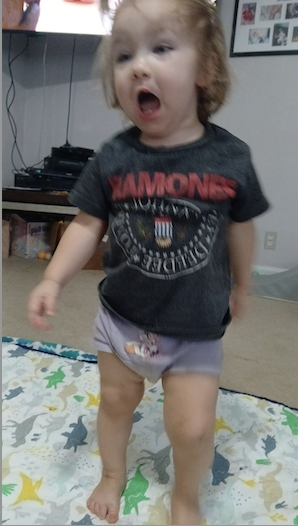
February 23 2024 my baby was born with cleft lip and cleft palate.
I was Determined to pump and give her my milk as she could not nurse let me tell you it was hard !!!
After alot of stress feeding tubs and a g- tube for the first year of life and Three times in the hospital for failure to thrive my supply tanked and at 6 months I got pregnant and with the support and love from all of you my baby got the milk she needed for the first year of her life!!! ❤️
She still has a long way ahead of her with more surgeries and speech therapy and bone graphing and everything but we are thriving now.
Stephanie
_______________
And some of our Amazing Donors
Hi! So I figured you'd get a lot of emails about how thankful moms are for donated milk, & how grateful families are to have the opportunity to provide breastmilk longer ect.
But on the other side of the donation world, I want to say I am thankful for this groups for allowing me to make room in my freezer, for introducing me to a few moms who became friends & making my pumps worth it. I am clog prone & have an over supply so it's a balancing act to nurse enough, pumping enough, and gives me a peace of mind that I'm not pumping for no reason. I donated milk to a friends baby I saw posted on your page, for 10 months, I recently donated my whole freezer to a mom with a baby in the nicu, and Ive donated randomly here & there. It makes pumping worth it!
Robin
_______________
I had my daughter in 7/2024 and was blessed enough to be an over producer. I then met another mom and was able to donate my milk to her child. I was able to feed her baby and my own for over 6 months!
Sarah M.
_______________
I gained a best friend and was able to help feed not just one but 2 of her sweet babes❤️.
Millie
_______________

When I had my first baby, he nursed well and I had, what I feel, was an easy experience breast feeding. Flash forward to my second baby, a beautiful girl. I thought my experience would be similar to the first, but I was so wrong.
By the third day, I was so defeated and so frustrated that she would not latch, whatever the reasons - her reasons - were. I started pumping every 2 hours starting when my girl was 3 days old and saw a LC to try to find solutions. Pumping was so hard on me, but I wanted my baby to stay on breast milk if we could make it work, and we did together. Through pumping, I made sure I stayed with pumping every 2-3 hours, even during the night. I started to overproduce, but it wasn't by much but it was more than she needed and I built up a stash of milk in the freezer. I was thrilled that I didn't have that hanging over my head and didn't have to worry about having enough milk, enough food, to give to my baby.
Then I remember the formula shortage. Heartbreaking as it was! I remembered thinking how those parents had nothing to give to their baby. I started to research and found that milks banks and milk sharing groups and sites were trying to get milk to these hungry babes. I thought how amazing it would be to help, and I found Eats on Feets. It was a way to connect with babies locally. It was a face to the donation. I donated only a few hundred ounces over about 1.5 years, but to some families, any amount matters.
I'm still Facebook friends with one mother I connected with. I love seeing the little babe. I'm so glad Eats on Feets exists so that every little babe has a chance to have a full tummy.
If anything about this reads strange, please know that I'm typing this during nap time of the same and sometimes you just have to type things quickly. Hope that my story resonates with at least one person who then donates to a babe in need.
Amy, EOF admin
_______________
I have 3 beautiful children- ages 5, 3 and 10 months. I have been extremely fortunate in being an over producer during each of my breastfeeding journeys. Collectively, I have shared over 2,000 ounces. It has been so rewarding to fill tiny bellies.
Christy
_______________
I exclusively pumped for the first 12 months of my son's life. I was an over producer with a small freezer. Eats on Feets connected me to moms local to me that I could donate my extra milk to. After my pumping journey concluded, i fed 5 babies including my own, easily donating 200-300oz per baby!
Kelsey
_______________

I am so thankful my lactation consultant told me about milk sharing!
Our breast feeding journey has always been a tough one. I was induced at 36+6 due to preeclampsia and my daughter struggled to have the energy to breastfeed. Luckily I was able to express and had enough milk to bottle feed her while she grew strong enough to be able to latch and feed effectively. She was 4 weeks old when she finally figured out how to breastfeed and refused bottles from then on. At 4 months she was diagnosed with a tongue tie which we got fixed and at the same time my supply dropped so she became very fussy at the breast and was trying to feed every hour. I was started on domperidone and told to pump twice a day to increase my supply. As she was still refusing bottles our freezer was overflowing with milk that I had no use for. When I was told about milk sharing I put a post up and had a huge response which cleared out my initial freezer load.
Just after this our daughter ended up with a nasogastric tube for top up feeds to increase her weight. I was finally able to use some of my expressed milk for my own little girl but still had ample extra bags that I continued to donate to two wonderful mummas. After the nasogastric tube was removed 4 months later I no longer had a need for any milk again but was still pumping twice a day to maintain my supply in order to be able to breastfeed my daughter. I continued to donate my milk to the two mummas I had gotten to know who are so appreciative and it gave me great pleasure being able to help them with their feeding journey!
Jayde
_______________
i just completed my 4th time breastfeeding (weaning my 4th as we speak) i started donating with my second as i was an over producer with her and all the times after that. i helped feed twin babies that were struggling when mama couldn't produce enough for twins, i helped feed multiple other babies in CA. then i moved to Idaho and had my third, helped feed multiple babies with my third in Idaho. another set of twin babies that were struggling and couldn't tolerate formula. and then with my 4th baby, i donated to a couple mama's and babies. but i donated to one baby i will never forget. a mom had her baby and shortly passed away of cancer and her friend was getting donor milk for the baby that was left behind. 😭. and i was one of the donors.
after all my donor babies started to get my milk they would get chunky lol. it was a joke with my family. need your baby to chunk up? give them Sarah's milk. all in all, breastfeeding and donating has been a huge part of my life. not once did i charge for my milk. i donated joyfully to be able to help these mamas and babies. i will miss this part of my life. as im finishing up my last breastfeeding journey. 😹. it's bittersweet for sure. as im looking forward to seeing all my babies grow in other ways and looking forward to freedom of not having to pump anymore. but definitely grieving this special part of my life too.
Sarah B.
_______________
I was traveling, staying in Az for 3 days when my baby was close to weaning. I figured I'd pump and dump while gone and by the time I got back, he was ready to be weaned anyway. Regardless, it broke my heart to think I'd be wasting precious breast milk. I posted something about it on Facebook and a bunch of friends chimed in about Eats on Feets. I was overjoyed to get connected in Scottsdale and be able to share probably 40 ounces of breastmilk!!
Shelly
_______________
Never Forgetting our Angels
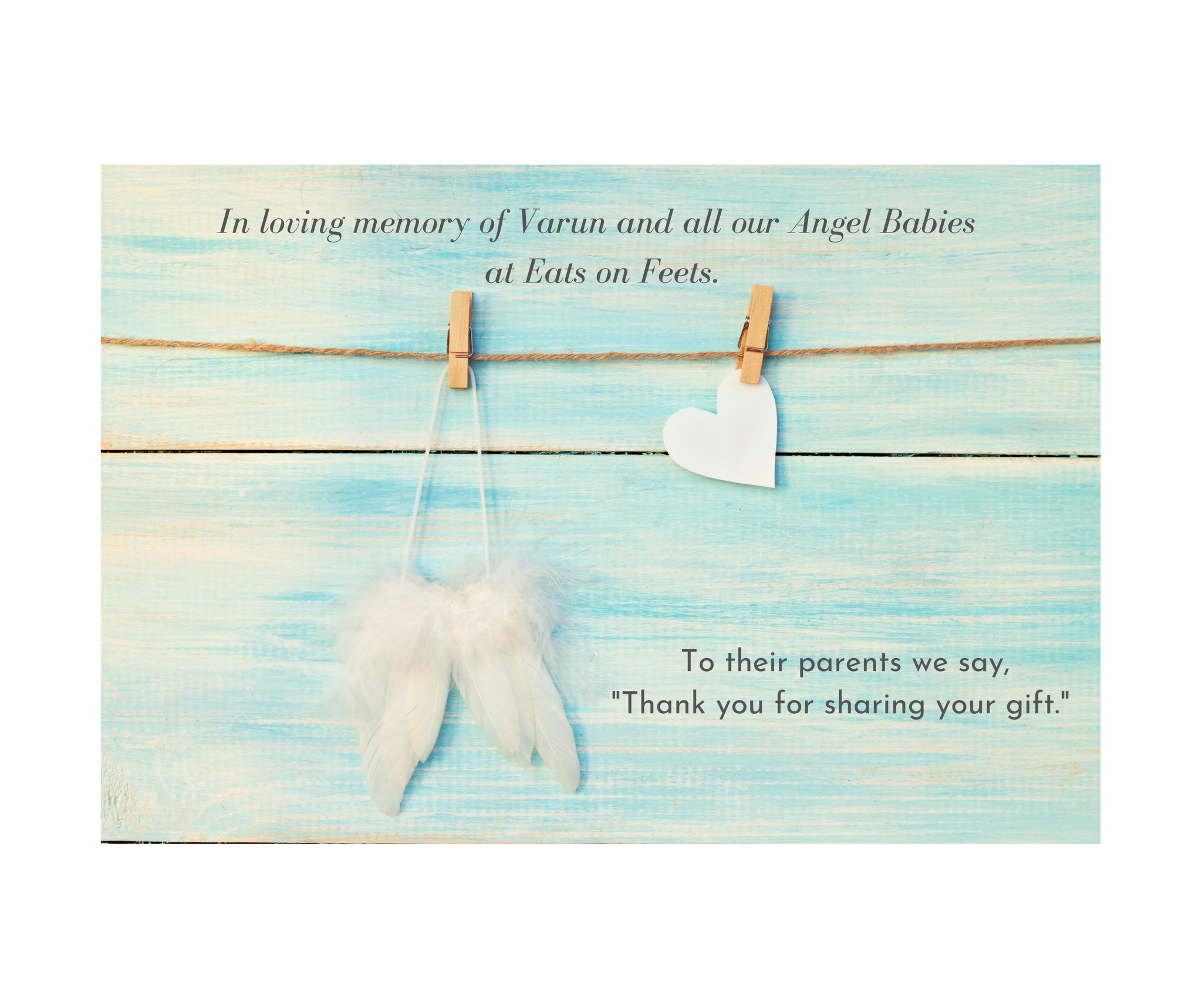
Last but not least, we have many donors who have angel babies. Theirs is an amazing gift. The memory of their babies are a blessing!
Thank you for giving us the opportunity to share our stories and have them published! My story has many emotions, please read with an open heart:
In August of 2023, we joyfully embraced the news of expecting our fifth child. The early stages of this pregnancy unfolded with the predictability we had come to cherish from our previous four children, filling our hearts with anticipation for the arrival of another little boy to join our family. However, as we prepared our home for Christmas celebrations, our dreams were shattered as we faced the heart-wrenching loss of our sweet boy at just 20 weeks and one day, due to a placental abruption.
In the days that followed, as I began to prepare for the postpartum journey ahead, I was taken aback to discover that my milk had come in. In an impulsive yet instinctual response, I retrieved my collection cups and realized it was still possible to establish a milk supply. In those somber moments of reflection, I understood that this was a path I needed to pursue. With urgency, I sought out a second-hand pump while awaiting the arrival of my own, and my supportive community rallied around me, providing milk bags and sterilization supplies.
As I immersed myself in research on milk donation, I found that Eats on Feets resonated with our needs the most profoundly. Little did we realize, this organization would play a pivotal role in our healing process, one donation at a time. Ultimately, I was able to pump nearly 2,000 ounces—over 15 gallons of milk—nourishing six different babies in the process. The years 2023 and 2024 unfolded in ways we had not anticipated, yet amid the unexpected, we discovered a profound sense of peace in how our journey evolved. I will always recommend Eats on Feets, as this organization holds such a special place in my heart.
Ellisa
Monday, March 11th 2024
Are You Being Scammed?
Some things you can do.
By Maria Armstrong
As milksharing has grown more widespread in our society, it has shown up on the radar of people with ill-intentions. Nearly every day we receive alerts from people who paid or were asked to pay for shipping milk that does not exist. We also receive alerts about people flipping milk, ie. requesting in one group and selling it in another. We remove these people as we become aware of them, but this, unfortunately, is usually not before someone has already been scammed.
Eats on Feets has long maintained that the self-determination of families is extremely important for the safe community-based sharing of human milk. Our community groups are public so that no one is at the mercy of an admin to be added or have their post be approved and we do not believe that making our groups private will prevent scams from happening. Eats on Feets cannot take responsibility for screening people nor do we want to give the impression that joining or posting in our community groups means that any individual has been screened by the administrators of the Eats on Feets network. People who use our network do so at their own risk.
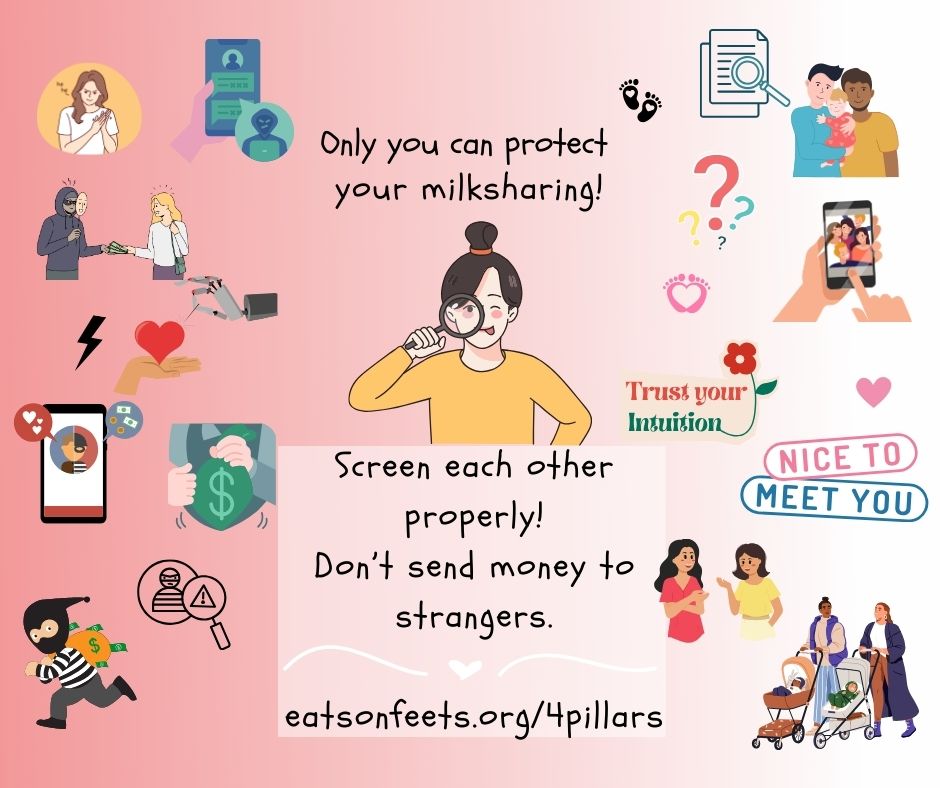
Scams are an unfortunate part of society and especially of online spaces. It's awful. It is even more awful when someone is just trying to feed their baby as this is already such a vulnerable time in life. However, no matter what we do or try to do, Eats on Feets nor the many volunteers who run the groups, can protect you. Only YOU can protect yourself: Follow the 4 Pillars of Safe Milksharing! A crucial, indeed, a PILLAR for the safe sharing of human milk is for donors and recipients to thoroughly screen each other.
DON'T BE SCAMMED! Know thy source!
Someone who
- Offers to ship for a fee or partial fee (May say they work for a courier company and do this all the time.)
- Requests a large amount only (Possible milk flipping.)**
- Donates as well as sells on various platforms and tries to have you pay (Supposedly thought you were on a selling site.)
- Declines to meet in person and has you drop your milk off or leave it out
- Offers to send you bags via an online store directly
- Declines to answer your questions or is vague about health, lifestyle, and proper handling of milk
- Reacts offended by your questions
- Declines to share a picture of themselves with their baby
- Declines to offer a reference if asked
- Has a new FB profile with few friends and pictures***
- Feels off to you
... may indeed be scamming you!
Do not send (shipping) money to strangers. If you must use shipping, use prepaid labels or shipping accounts. A scammer will refuse and disappear.
Money and community-based milksharing
Aside from the risk of sending money to a stranger promising milk, it also bears repeating that it is not a safe practice to buy human milk via community-based milksharing.
What are the issues?
Some issues of buying human milk from individuals include:
- The milk may be a donation they received from someone else
- The milk may not be human at all
- The milk may be cut with other liquids
- The milk may come from multiple unknown donors
- A baby may be deprived of its own milk when a family is on government assistance and receives formula
- Studies have shown that purchased human milk contains higher levels of bacterial contamination
Please make us aware of any suspicious activity in your area and report any wrongdoing to the admins of your community group. You can also email us. This helps us protect community-based milksharing and the tiniest humans benefitting from it.
We know how much time and effort goes into feeding a baby. We especially appreciate all the donors who selflessly donate their extra milk to a baby in need. While Eats on Feets does not allow selling, buying, and bartering in our spaces and via our spaces, we do not dictate any ensuing milksharing relationship between donors and recipients. Recipients are free to thank their donors however they wish!
_______________
* People can post anonymously for privacy reasons. Admin can see who posted and remove someone who has been flagged.
** Some people may only be able to make the drive for a larger donation.
*** Some people have not had a Facebook account but created an account for milksharing.
Friday, February 16th 2024
Tanisha's Story
Eats on Feets Missouri Volunteer
My Background
I'm a first time mom to a little boy. We spent hundreds with specialists, trying to make nursing work, but ultimately I ended up having to pump. Through the pumping process, I learned that I had a significant oversupply. I pumped for 10 months (720 hours I spent tied to a pump... but who's counting?!) After my kiddo was diagnosed with a dairy allergy at 6 weeks old, I had lots of milk leftover that was completely unusable.. I knew right away that I wanted to donate to caregivers in need. On top of that, being able to provide dairy-free milk to other allergy babes was a huge blessing as well. In total, I was able to help feed 13 babies at one point or another between regular + emergency donations during my breastfeeding journey.
My Motivation for Volunteering
I know that it takes volunteers on every side of this to make it work (donors volunteering their time to pump + bag, admins and moderators volunteering their time to run the pages, and owners volunteering their time and energy to ensure that the program works as it should). I was thankful to be able to contribute in another way, as I believe that milksharing is a monumental testament of "It takes a village".
My Life
I'm a first-time mama to a 1.5 year old boy. My husband and I have been together for 8 years; we have two doggos + a cat, and spend most of our 'free' time doing things as a family. I'm a photographer, executive assistant, and virtual assistant, and the biggest carb enthusiast you will meet!
- Favorite Dish: Texas Roadhouse Bread + Butter (usually, way too much)
- Favorite Past-time: Reading the same book 100 times to my toddler
- Favorite Animal: Doggos!
- Bucket List Item: Explore Greece!
Wednesday, November 30th 2022
Selling, Buying, and Bartering
What are the issues?
By Jessica Beavin and Maria Armstrong
In general, any bartering puts a price on human milk. We may not think of it as such when offering pump parts since we are not giving money, but bartering when practicing milksharing is essentially commodifying private exchanges of human milk.
Commodification is putting a price on things that shouldn't have a price. The Eats on Feets network is for the donation of human milk only. Full stop. We allow bag-for-bag (or bottle) replacement on our network as the one and only exception, but it must be clear that this is not a requirement. We ask our community members to be mindful of this when posting. We, Eats on Feets, simply ask donors to give their extra milk freely and for recipients to be thankful and respectful of their donors. Not everyone is in a position to be able to buy bag or bottle replacements for a donation so when this is added to an offer, someone in need may be discouraged to respond. Likewise, a donor may skip over a request from someone who cannot buy replacement bags. This can mean one less baby obtaining human milk when even one feed a day can be so important.
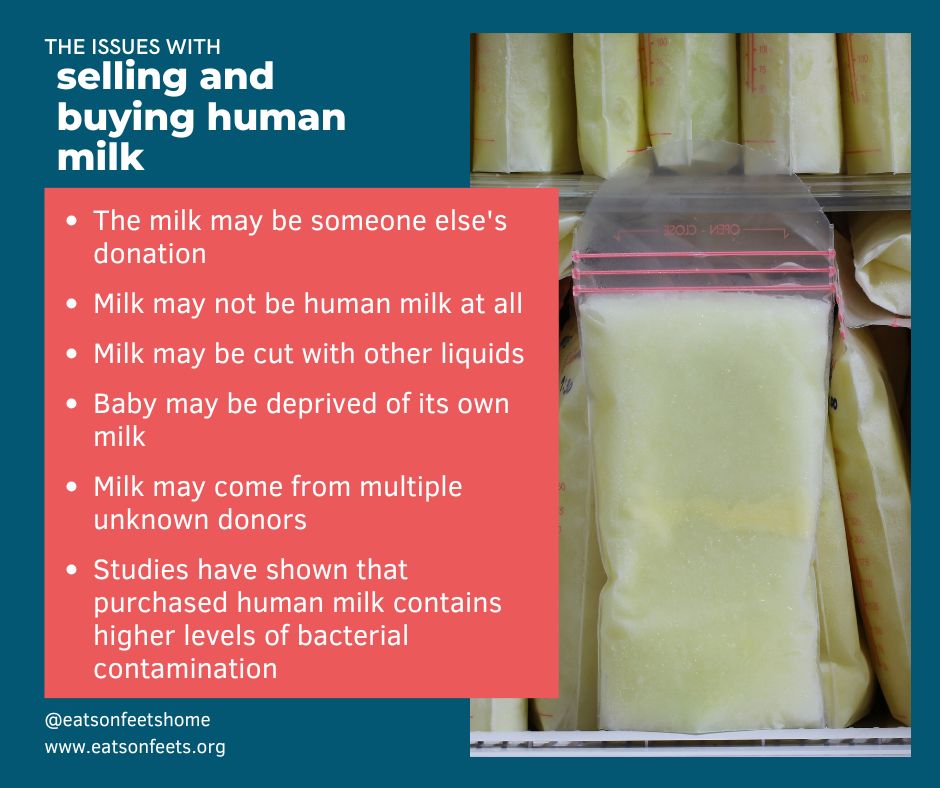
The commodification of private arrangement human milk adds serious ethical issues to the safety of community-based milksharing. Some issues are:
- The milk may be someone else's donation
- The milk may not be human at all
- The milk may be cut with other liquids
- The milk may come from multiple unknown donors
- A baby may be deprived of its own milk when a family is on government assistance and receives formula for their baby
- Studies have shown that purchased human milk contains higher levels of bacterial contamination
In our experience, some specific issues with bartering pump parts are:
- Kits are expensive, ranging from $20 to $50-60USD
- Individual items can be expensive, ranging from $3 to $50USD for some parts
- Given pump parts are sold instead of being used
- "Pump parts" is vague and can mean a lot of things, including being code for money
Below is a chart of parts compiled by Jessica, one of our admins and mentors.
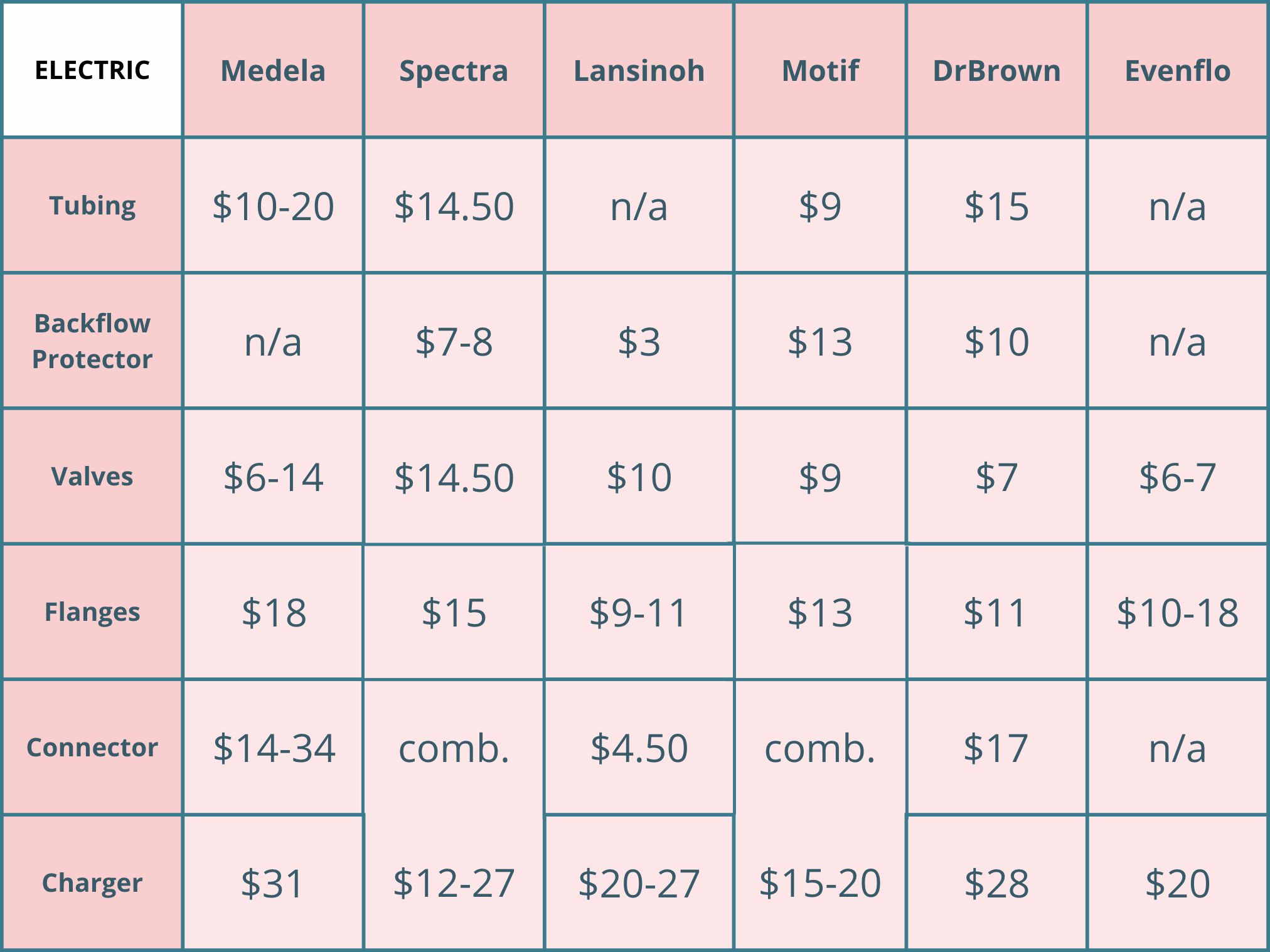
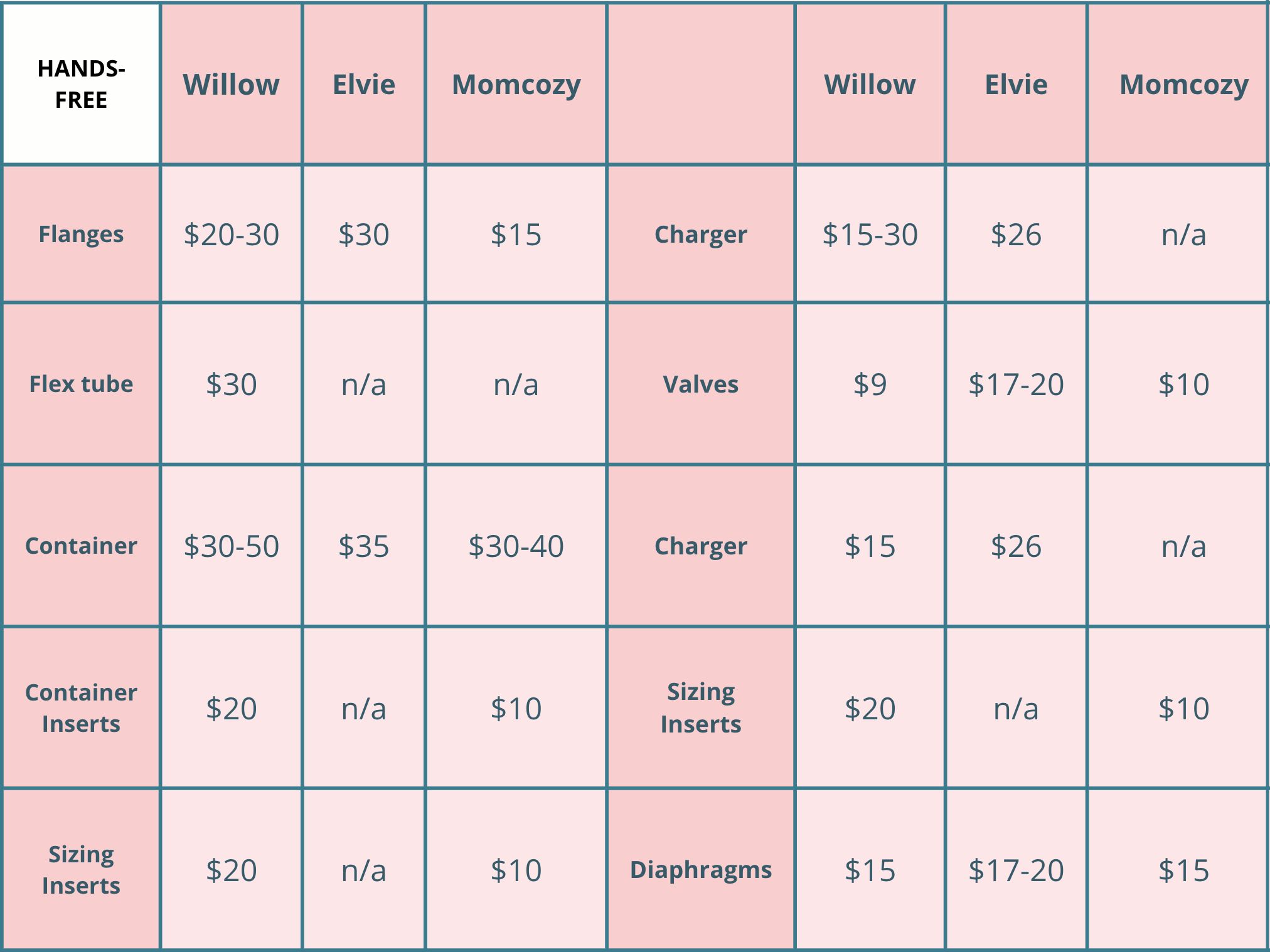
Some parts need to be replaced every few weeks, others every few months.
When someone offers "pump parts" what does this mean? Do people who have never pumped even know or are they just participating in an assumed culture, figuring they'll just give money? Is someone expecting a valve? Two valves? Valves for their sister? A battery? A whole kit? A pump? What is a recipient to do if three donors want pump parts for just a few ounces? How many ounces for what parts is OK? What is the exchange rate? It is impossible, nor do we want to put parameters around this. Any bartering puts undue pressure on parents looking for milk for their baby and donors will potentially disregard families who can't play the part.
Our guidelines are clear and all posts asking for or offering pump parts or anything other than bag-for-bag (or bottle) replacement are removed from our pages and groups. Members may or may not receive a notification about this, depending on the format of the chapter (page or group) and the availability of the admin of a chapter.
Other milksharing places may allow members to request or offer pump parts, or other items, or allow selling and buying in their milksharing spaces. We do not. This does not mean that we dictate what arrangements people can make together privately, especially when there is a long-term donor-recipient relationship. We simply protect our spaces and the way offers and requests are made on our network.
One of our main motivations for this is that Eats on Feets aims to remove socio-economic barriers to accessing human milk. It is our hope that all babies have access to free human milk. We are also mindful of barriers that donors may have in order to donate their extra milk. Bags and pump parts add up. Reusable containers are an option as well as other ways of expressing milk. When someone has a good supply, which donors have, hand expression is very efficacious. Using passive collection and pressure collection with a jar are also great methods. Pumps have a place, certainly, but pump companies are making the same huge profits over our nipples as formula companies do.
If you are new to milksharing through Eats on Feets, welcome! Please acquaint yourself with our guidelines. Even if you are not new to milksharing, it is important to keep using discernment when practicing community-based milksharing. Our guidelines were developed to promote safety and equity within our communities and we have operated within these parameters since 2010 when we started making ripples.
Bios
Jessica is a stay-at-home mom of 3 and full time student to become a Child Life Specialist. Jessica was able to give her twins breastmilk for 3 years thanks to her awesome donors. She joined the Eats on Feets team in 2019.
Maria Armstrong came to us from The Netherlands and is the mother of 4. She is a childbirth educator and a doula serving the Portland, OR and Vancouver, WA metro areas since 2007. She is a strong advocate for the self-determination of families wherever she finds herself. Her favorite spot is anywhere on the Oregon Coast.
Monday, September 13th 2022
Kara's Milksharing Story
From recipient to donor.
By Kara Strickland-Judd
My firstborn was a sweet girl born at 7lbs 10oz. I was only 21 and I was so scared. I knew I wanted to breastfeed but wasn't sure how. I had limited help in the hospital and no other adult to help me in the experience. I winged it. We used a breast shield to nurse and I never pumped until I went back to work…
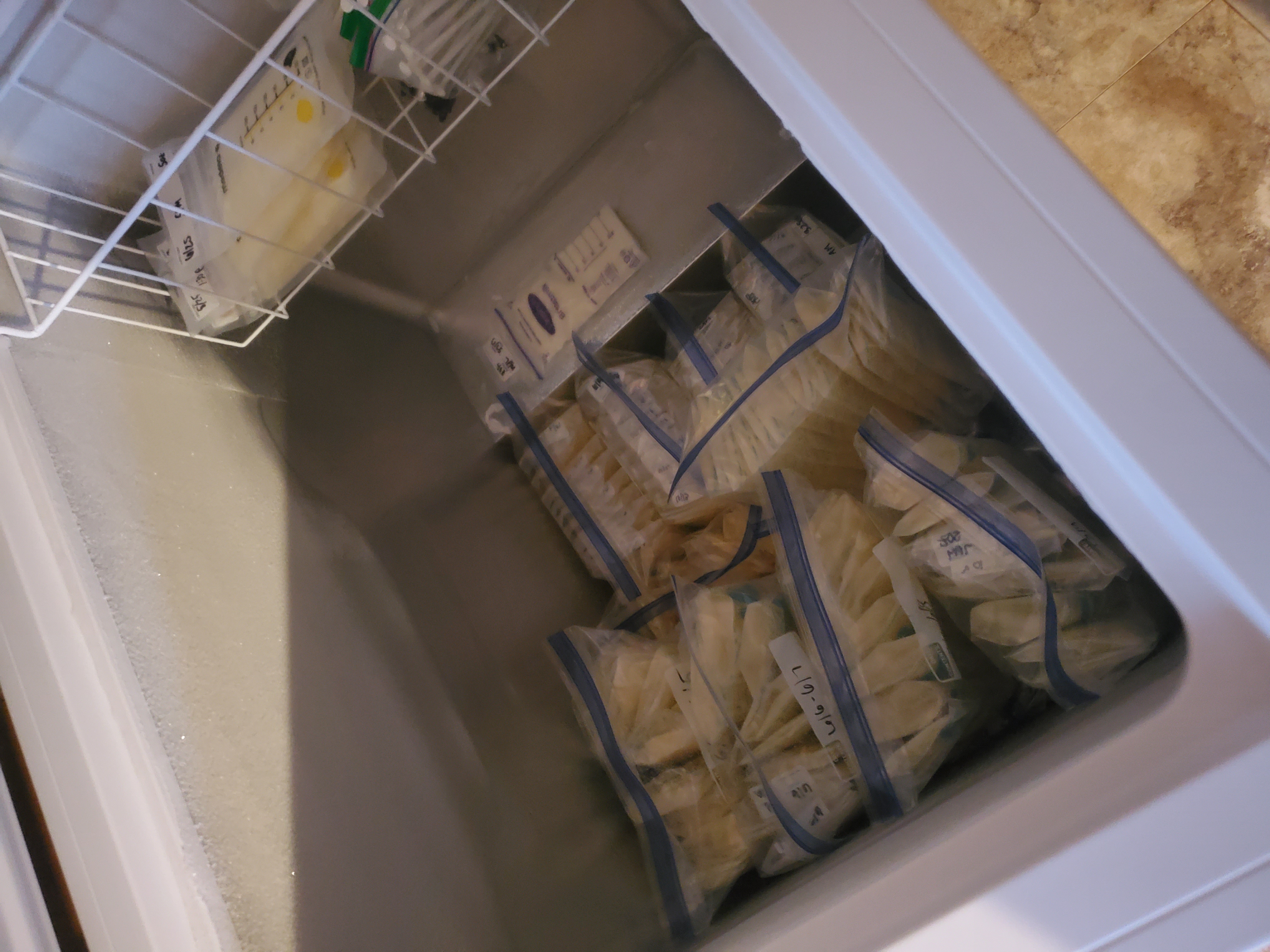
When I went back to work at 6 weeks postpartum, my milk supply began to dwindle. I had a stash at home but quickly worked through this and began to panic. I could only pump maybe an ounce from each breast at work and I only got to pump twice a shift. I would go up to 4 hours sometimes. I didn't know then, but I know now, that that was a huge cause of my supply issue. Breastmilk doesn't regulate by 6 weeks postpartum! A friend of mine recommended looking into a donor. I used Facebook to connect with people who had milk to offer. I was skeptical but had to go with my instinct.
The women who donated to me were a blessing. One woman even drove me an emergency 100 ounces one evening when I realized my baby wasn't latching and I had run out of bags in my freezer. I wish I still had her number so I could tell her all about how my second journey is going and how she inspired me. Thanks to the woman who saved me so many times, I was able to avoid formula (and the tummy troubles it gave my baby). My first baby is now 5 and she knows she was breastfed exclusively by me for a couple of months and then we got support from other women to get us to 6 months. She is actually a cheerleader for me on this journey. Whenever her brother cries, she quickly tells me to, "Give him the boob!" It's funny to me that part of my support system is a human I created and breastfed.
Now, my second baby is 3 months old and I had so much support in the beginning. He was born a couple of weeks early and was only 6lbs so I knew I wanted to give him the best chance I could. The hospital was useless so I was proactive and got myself a lactation consultant outside of the hospital. The nurses didn't even help me postpartum because it was my second baby and they must have assumed I knew what I was doing. I enjoyed the alone time with my son and I think it helped us bond more in those early days. We did so much skin-to-skin. I saw a pediatric dentist and had my son's ties revised. I was fitted for the proper size flange for pumping. My milk production remains high. I nurse him on demand. He sleeps through the night almost every night (for now)! He is the size of a 6-month-old baby and it feels so good to see myself being successful this time around.
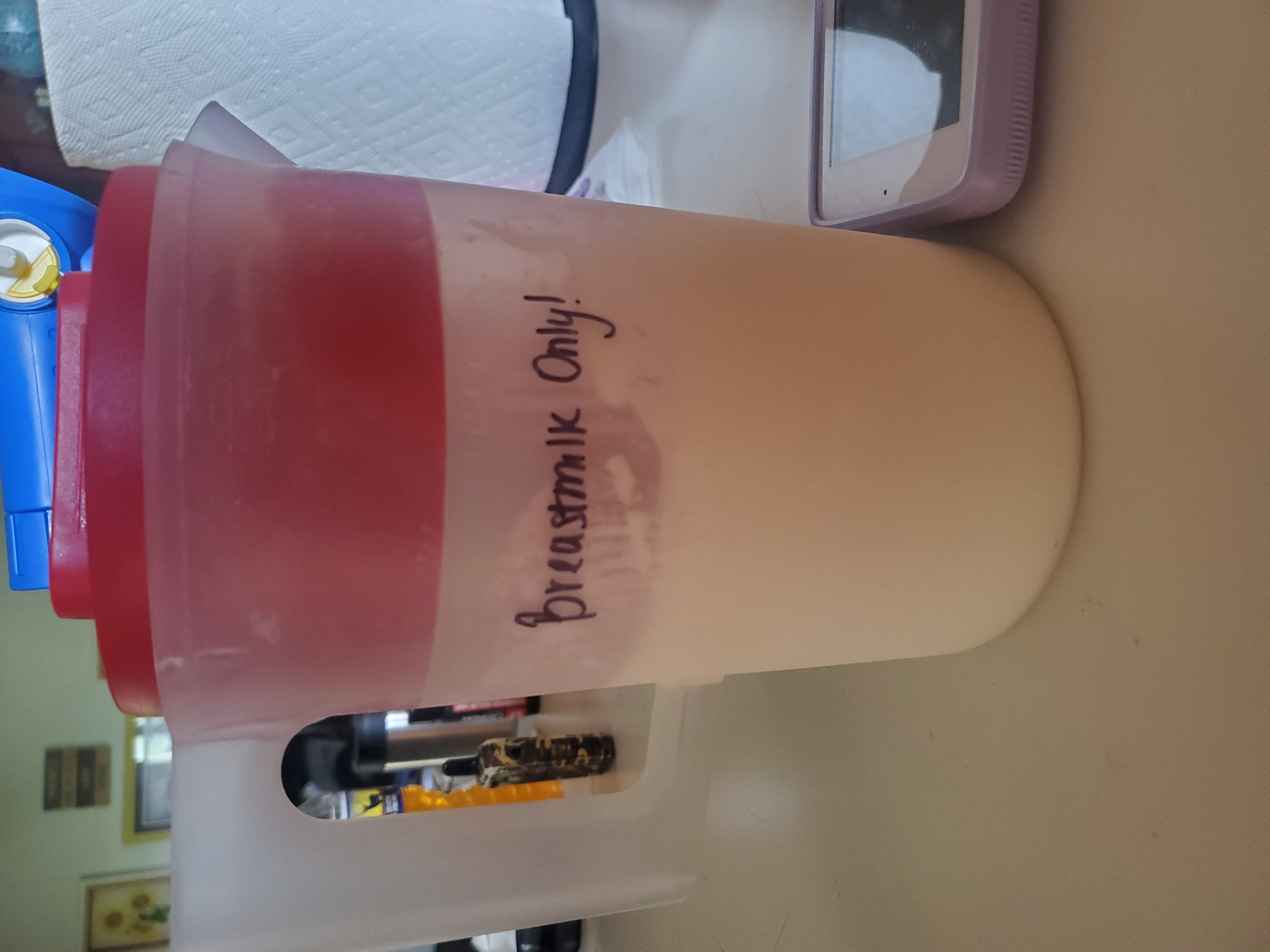
I felt so touched by the women who helped me with my first that I am so blessed to be able to help others. It has come full circle and I feel that I am finally able to give back. Those looking into milksharing, especially those who are receiving it, do not feel anything less than pride. You are doing what is best for your baby. You did not fail. I thought I failed my daughter for so long but I realized that some things just can't be changed. I had postpartum depression and anxiety that was made worse by my lack of production. I stopped trying to breastfeed altogether and this improved my mental health. Sometimes, you have to know when to quit. If the journey is making you miserable, you should stop. It shouldn't make you miserable. You'll be tired and you'll smell pretty awful some days but you shouldn't let the journey come between you and your mental health because then you are no longer doing what's best for your baby. Some things are simply out of our hands. That's why donors are important and without the women who need the donors, the circle would be incomplete. Thank you to those who need milk and thank you to all those who have given milk. Every drop counts.
Bio
Kara is 28, married, and has two kids, a 5 year old girl and a 3 month old boy. Originally from Chicago, she is now badass homesteading in rural Tennessee.
Sunday, May 15th 2022
Infant Formula Shortage
Answers to media questions
By Shell Luttrell and Maria Armstrong
The work of Eats on Feets is to inform and support the safe sharing of human milk. All babies deserve human milk and all families deserve access to safe human milk for their short or long term needs. All families also deserve to be able to set specific criteria for their own needs.
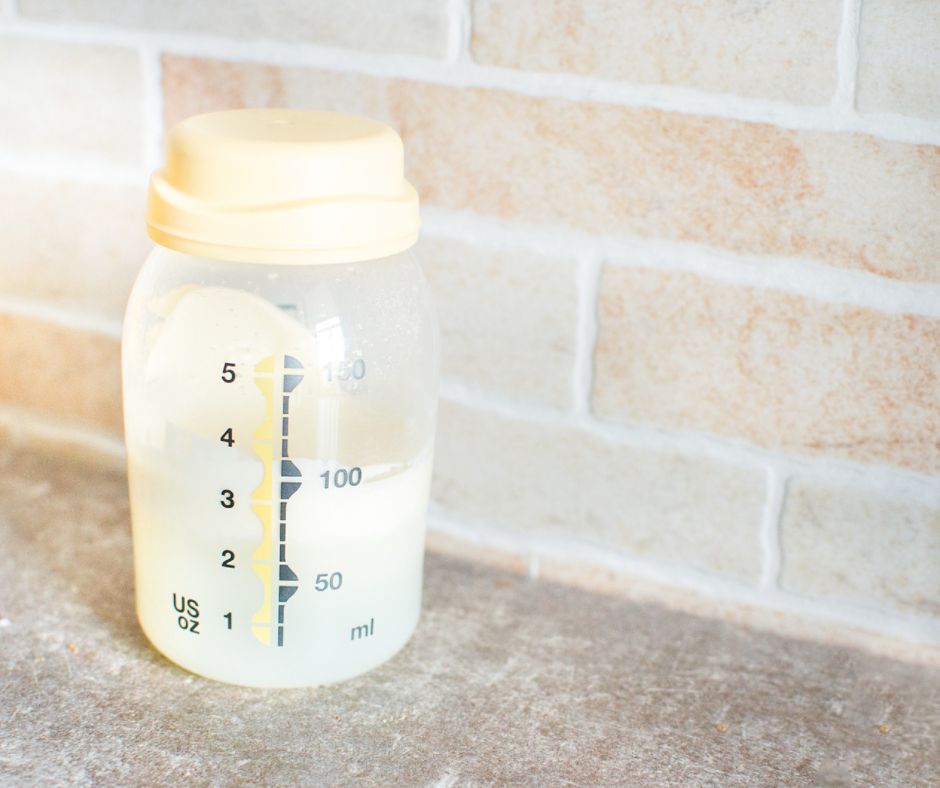
There are many reasons why someone may not be able to fully provide their own milk for their baby. We do not judge families or use any form of hierarchy to determine which babies receive milk through our network. Eats on Feets simply provides a safe space to initiate contact, a website with safety information, and guidelines for using our Facebook chapter pages.
The focus of Eats on Feets is the singular issue of informed community-acquired donor milk for babies in need. Community-acquired to us means direct family-to-family, without intermediaries. To support this focus we have honed and crafted our guidelines over time to adjust to the growing demand and to address unsafe practices around the internet.
When it comes to media coverage and recommendations from organizations like the AAP on supplemental infant feeding, community-based milksharing is often overlooked as a safe and sustainable infant feeding method. This is not only an often purposeful oversight but also irresponsible. Case in point: Most coverage of the current formula shortage as well as official suggestions from most, otherwise, reputable organizations only include where to look for formula, reiterating to not feed home-made formulas, goat or cow's milk, to not dilute, etc. There is typically no mention of the obvious: that families with human milk to feed their own baby can safely help families in need.
We have been inundated with news sources wanting to interview us on the topic of the formula shortage. To date these little sound bites and tiny quote grabs have failed to fully represent Eats on Feets and the issues at hand.
Below we are providing answers to the questions that we have been asked.
Has the formula shortage increased your profits?
Eats on Feets is strictly milk donation based and the network is 100% volunteer-run. There is no exchange of money for milk involved on our network.
Are you busier since the formula shortage started?
It seems that the chapter pages are growing faster and that there are more offers and requests that coincide with the current shortage. We are diligent in upholding our safe space according to our page usage guidelines as well.
How many facilities do you have?
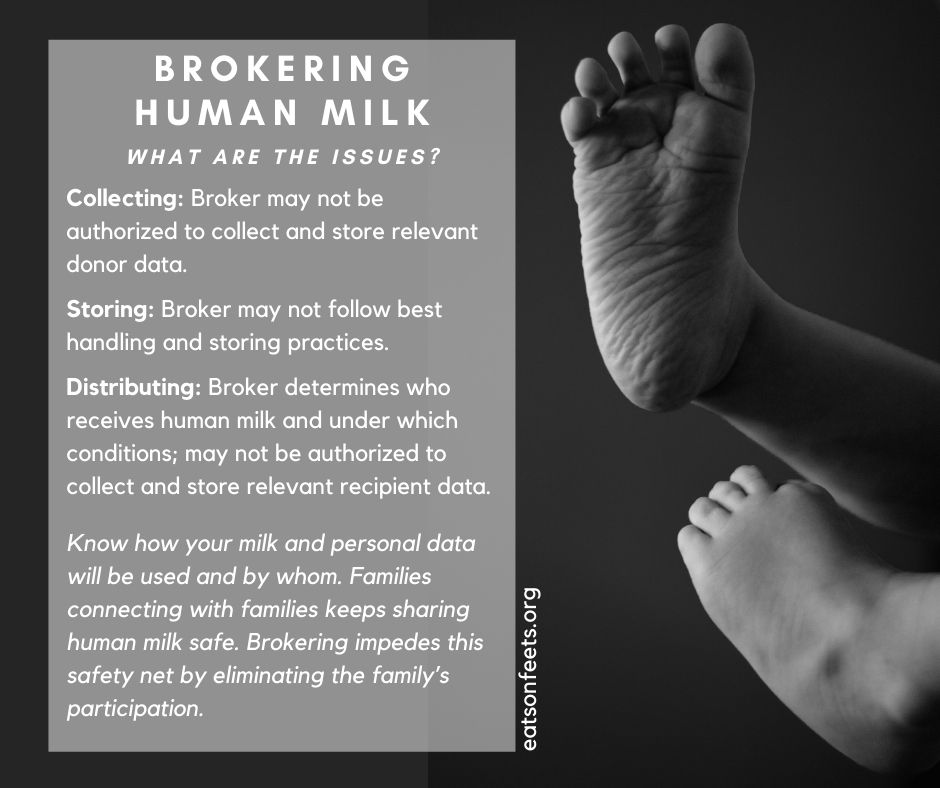
Eats on Feeds does not have a facility. We do not broker human milk. Every household practicing private milksharing is its own facility so to speak and we have no idea how many there are. We only know that there are more than we are aware of.
Who can receive human milk from your network?
Any family in need can request for themselves and any donor can donate to whom they wish. We do not dictate their arrangements but only offer supportive safety information for their own screening and safety processes.
Have any babies become sick from using milk obtained from your network?
We are not aware of any baby getting sick from community-acquired human milk in 12 years of providing this space.
What about the study showing bacterial growth in milk obtained through online sources?
Please see our response to that study here.
Instead of working towards solutions for infant feeding the AAP and Milk Bank owners made the choice to perform and publish a sham study, thereby disempowering families and contributing to the problem that families are now facing. Our hope is that one day they will sit with us so that we can explain to them how our safety guidelines work to support healthy babies.
Has the Eats on Feets network encountered the shaming of parents who cannot or who otherwise choose not to lactate?
Anything to that extent is removed instantly. We have no patience for it. Babies need human milk. Period. That said, the lack of breastfeeding is one of the issues not addressed in current coverage of the formula shortage. Inappropriate and unpaid maternity leave, inadequate support from employers, and lack of access to affordable professional support are to blame. We are barely addressing these issues as a society.
What options do formula-dependent families have?
To also supplement with human milk as possible. Any amount from a healthy donor is good to add for all its known beneficial properties. Many of our community members feed a mix of their own milk, donor milk, and formula. The polarizing mentality of 'breastmilk is best' and 'fed is best' is not for us. Fed is informed and informed absolutely includes community-acquired donor milk. Obviously, there are risks to using formula as well, risks that are not addressed properly. Parents often don't know to use boiled water that has cooled a little for the preparation of formula if their infant is under two months of age.
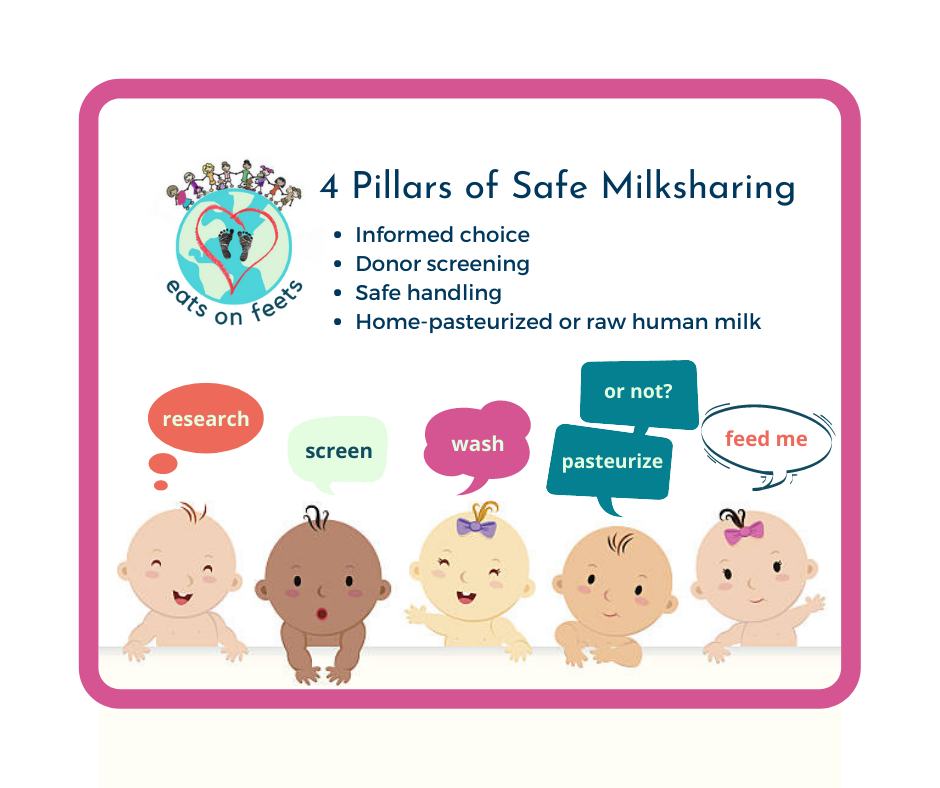
What can families turning to human milk sharing do to ensure its safety?
Use the 4 Pillars of Safe Breastmilk sharing to start their informed choice process. The 4 basics are simple and families can decide together what they need and is important to them.
Any family or group can access our safety information for their use without joining or using the network. We only ask to be given credit when our safety information is copied or printed.
Please visit eatsonfeetsresources.org to access the resources for the safe sharing of human milk.
Tuesday August 25th, 2020
An interview with Michelle Ivette Ponce, Traditional Healer, Community Organizer, and Performance Artist and Lakisa Muhammad, Midwife, Educator.
In honor of Black Breastfeeding Week (August 25-31)
By Shell Walker Luttrell, Founder of Eats on Feets
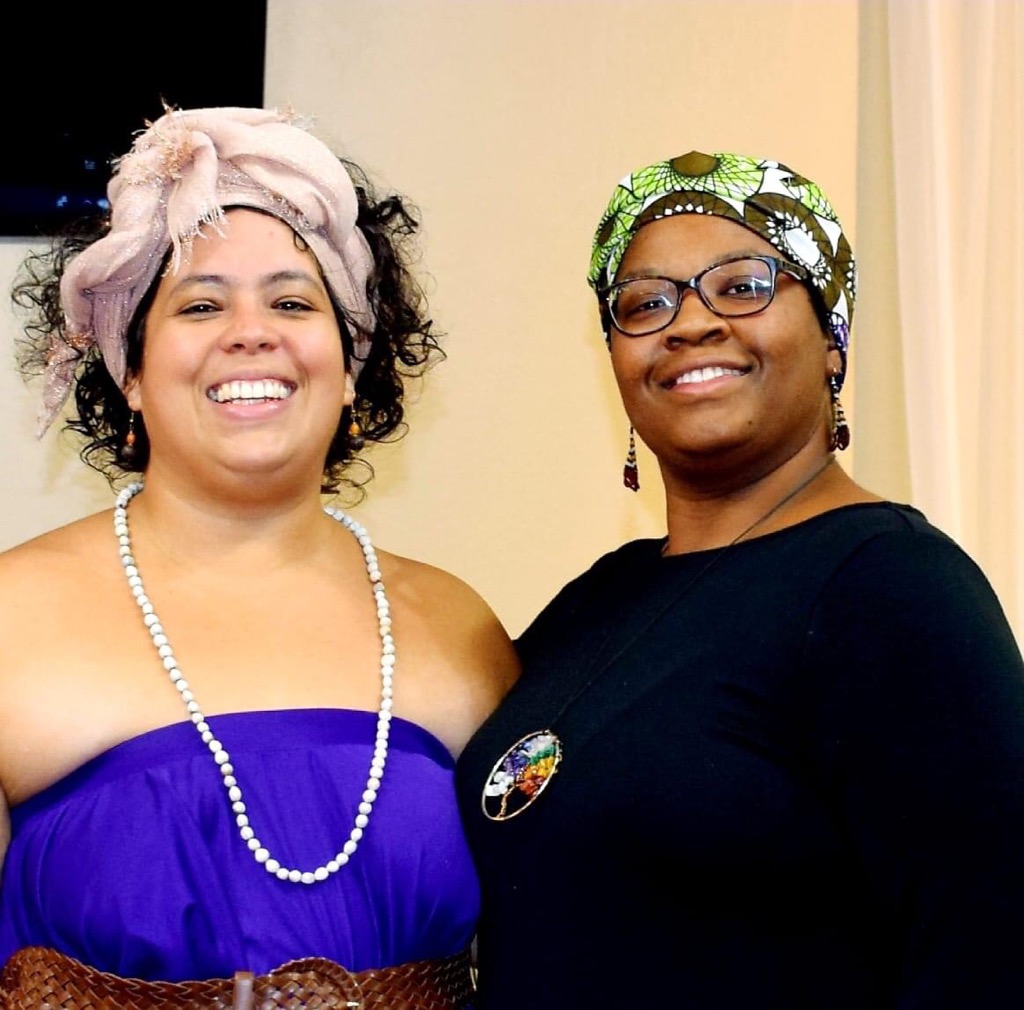
Hey Michelle! Hey Lakisa! Thank you for taking the time to talk with me. I know that you are both busy with your many projects. Your time means a lot to me!
Michelle: Thank you for having us. It's an honor to be inspired by your work and legacy!
Lakisa: Hey Shell! I always have time for you. And thank you for allowing us space on your platform to discuss this very important topic.
It's Black Breastfeeding Week this week!!! Yeeeees! Tell me about your personal breastfeeding experience?
Michelle: Breastfeeding saved my life! After experiencing a traumatic birth and postpartum period, breastfeeding gave my son and I the peace and strong foundation to survive and keep sane. It healed me. I just weaned him at 5 (5!) years old. What an epic journey!
Lakisa: I was a 18 year old college student when I first physically saw someone breastfeed. I remember thinking, "Oh that's breastfeeding. That's how you do it. I'm going to do that for my children." I successfully breastfed all 3 of my children, including twins, for 1 year and my youngest for almost 3 years. I did not have much family support. While my husband is now a lactivist in his own right, he even admitted he doubted me in the beginning. I took every breastfeeding class I could and read all the books. With my twins, I had access to lactation support through the hospital, and they were great. I'm proud of myself for breastfeeding. I set a goal and with determination, I achieved. I don't know what it would feel like otherwise, but I also believe that the bond I created with my children through breastfeeding made me a better mother.
For those in our audience who are new to this event: Why is Black Breastfeeding week necessary?
Michelle: Because Black parents are isolated and need support when it comes to birth and breastfeeding. The community is still learning and remembering about the benefits of breastfeeding so they can provide a nurturing environment for breastfeeding families. And we know that the benefits of breastfeeding increase the wellbeing and health of both parents and infants so it's a perfect way to combat the crisis of sickness and death surrounding Black births.
Lakisa: For those in the audience who don't know, breastmilk for Black babies is not a nicety. It is life-saving considering all the other obstacles we are up against, especially in regards to prematurity and NICU care. There was a report released just this week stating that Black babies are 3 times more likely to die if the doctor providing care for them is white. Ironically, mortality rates for white babies was not affected by the doctor's race. The very least we can do is give Black babies breast milk. So to do that we must overcome the many barriers Black mothers face in achieving a successful breastfeeding relationship. Some of those barriers include lack of education, lack of addressing the historical context of slavery and wet nursing, and lack of support on familial, social, and professional levels. Black Breastfeeding Week seeks to spotlight and explore solutions to mitigate these barriers to breastfeeding success for Black families.
Lastly, BBW is a celebration! We are encouraging and uplifting all the families who beat the odds, some by their own sheer will to say, "I am breastfeeding my baby!" And they did! Those families deserve praise from their community, and BBW is one vehicle we can use to say, "We see you."
Tell me a little bit about how Black Breastfeeding Week works in terms of the national organization and the local events.
Michelle: Nationally, it's the 8th year that the Black Breastfeeding Week organization puts together a theme and hashtag to unite national events and efforts around the week. By streamlining language and focus, we join the national movement through our local events. The national organization also shares the logo for local organizers to utilize in marketing campaigns.
Lakisa: It's been amazing to see the increase in participation over the years. The first year that I organized an event here in Phoenix in 2016, which is how Michelle and I met, there were maybe 3-4 cities that participated. Now imagine the joy of seeing BBW flyers on Instagram and Facebook from all over the country. The movement is growing.
What do you think are some of the most important actions that the local community can take to increase Black breastfeeding rates?
Michelle: The local businesses and organizations can sign on to a pledge to support and encourage breastfeeding in and around their entities, including providing clean private spaces and also train their personnel on local laws. They can support breastfeeding when happening in their spaces by defending and protecting the breastfeeding parent's right to breastfeed openly. Breastfeeding should also be an integral part of any childbirth education or advocacy measures. And providers and health care organizations need to invest in funding more Black people to get certified as IBCLCs.
Lakisa: We are facing a serious problem in our state with the lack of Black lactation consultants. We have a couple, but they work for medical facilities which by nature insulates them from the community. Black women are not getting culturally competent care in hospitals. Once they go home, they are no Black lactation consultants who can come into the home and support. This is the same for Black women who birth at home: if the scope of their issues is beyond the knowledge of their Black midwife or doula, there is no Black IBCLC to call. There are also no Black La Leche League leaders or Black Breastfeeding USA groups. There are no grassroots Black breastfeeding support groups. We need systems in place to support, train, and foster Black IBCLCs in private practice here in Arizona who are ready to serve Black women who have given birth in the hospital, birth center, or home setting. Is anyone in the audience inspired to take on this work? If so, consider this a call to action!
Bios
Michelle Ivette Ponce is a Certified Hypnotherapist, Spiritual Life Coach, and Celebrant. Michelle also is a Performance Artist and Community Organizer, Birthworker/Doula, and Healer. Michelle's success is supporting women to now boldly step into their higher selves by inspiring change, healing trauma, and removing obstacles towards achieving desired goals. Michelle trained at Southwest Institute of Healing Arts as an Integrative Healing Arts Practitioner. She has over ten years of leading and building community and sisterhood through gatherings, ceremonies, events, and performances. With her unique merging of traditional and ancestral wisdom, divine feminine energy, and movement and song, Michelle's voice reaches hearts and minds, calling us to remember to celebrate ourselves and the divinity within. Michelle's vision is in having vibrant, healthy and stable communities that grow and heal through nurturing connections with self, others, and Spirit. Her calling is to support healing in the community, especially women, to live empowered, healthy, and authentic lives with purpose. Michelle is passionate about traditional birthwork, and has trained in traditional birth companion and postpartum support for mothers and families. Growing up in Puerto Rico and New York City, Michelle inherited a passionate and exuberant self-expression that rhythmically celebrates life, community, family, healing and growth. Live drumming, Afro-Caribbean dance and singing, and Afro-diasporic culture and healing informs her enthusiasm for nurturing cultural and self-expression. Michelle offers ceremonies, performs poetry, leads workshops, as well as public speaking. She helps strengthen organizations and connections between birthworkers of color locally, nationally and internationally. Through coalition building and fostering spaces for Black and Indigenous People of Color to be empowered, heard, and healed, Michelle envisions dignity and balanced roles for traditional, spiritual, and emotional wisdom keepers in our communities. She is the co-founder and co-director of Arizona Birthworkers of Color, and currently resides in Phoenix, Arizona with her 5 year old son, Nafari.
Motivated by a passion to help pregnant families experience safe and healthy births, Lakisa Muhammad serves her community as a Certified Professional Midwife and a Licensed Midwife in the state of Arizona. Using her knowledge and training, she works to address and debunk myths and misconceptions, replacing them with facts and timeless traditions that lead to better decision making and better outcomes for birthing families at her practice, A Mother's Worth Birth Services. Lakisa also co-leads Arizona Birthworkers of Color, a group dedicated to uplift, support, and connect birth professionals of Color statewide. When she's not at a birth, Lakisa enjoys spending time with her husband, Dewayne, their 3 children, Amir, Yasina, and Hassana, and the family furbabies Myra and Calvin and 5 chickens. You can find me at amothersworthbirthmidwifery on Facebook and at amothersworth on Instagram. Lakisa also holds space on the web at amothersworthbirthservices.com.
Wednesday, August 12th 2020
An interview with Kimberly Moore-Salas, Diné Nation
In honor of Native Breastfeeding Week (August 9-15)
By Shell Walker Luttrell, Founder of Eats on Feets
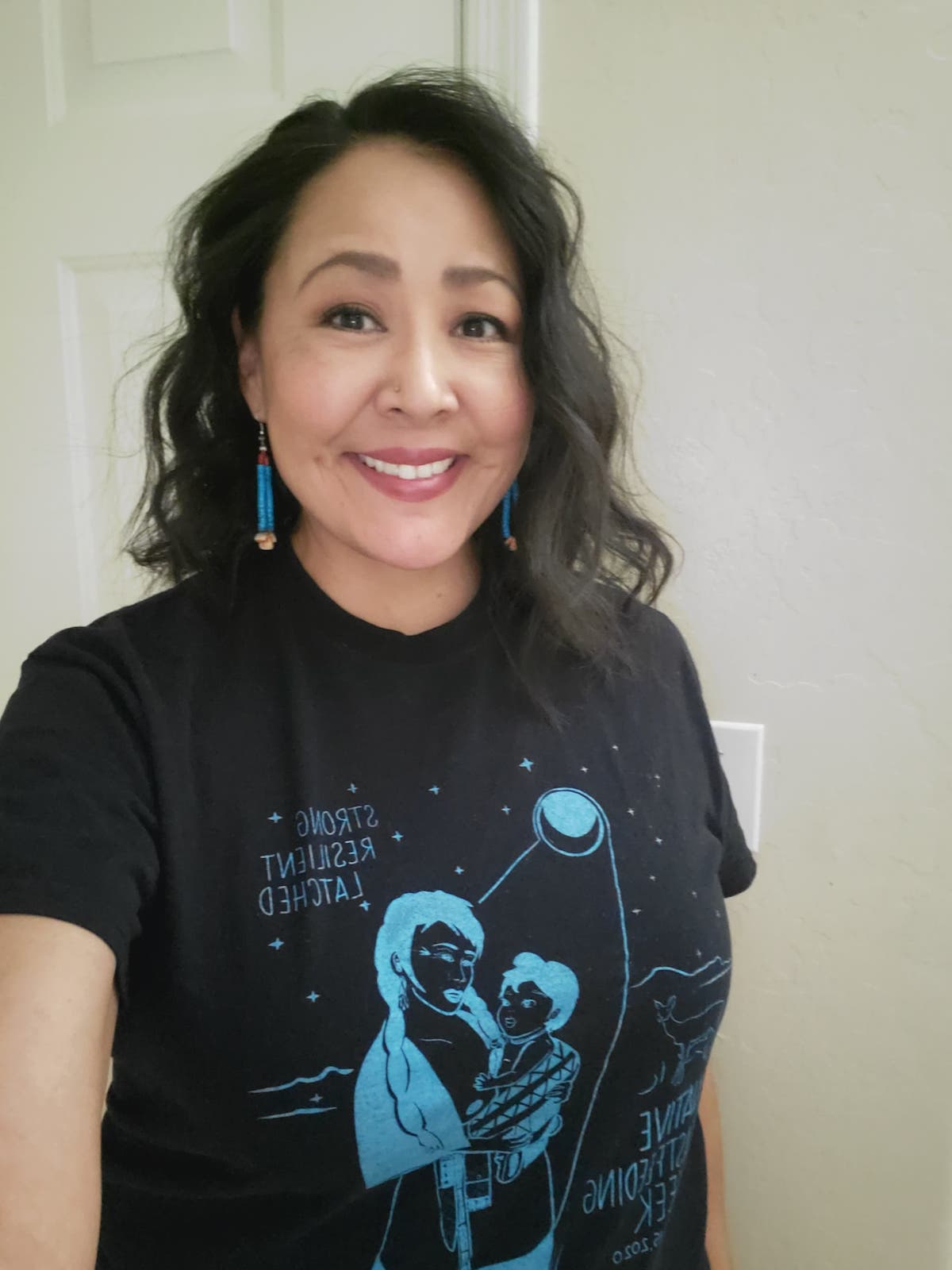
Hi Kim! Thank you for taking the time to speak with me! Let's start with the basics. Tell me about all of the various projects that you are working for.
Hi Shell! I am an IBCLC at the Valleywise Hospital in Phoenix, AZ. I am also an Indigenous Breastfeeding Counselor co-instructor, a board member of the United States Breastfeeding Committee (USBC), a member of the Navajo Nation Breastfeeding Coalition, and recently, a member of the Arizona Department Maternal Mortality Review Committee.
That is impressive! I know from experience that only passion and deep commitment keeps someone focused as you are!
Well, when I moved to the city it was a culture shock! At home, I grew up seeing breastfeeding and my grandmother encouraged it. It was normal for the women in my family to breastfeed. Milksharing wasn't uncommon either from the stories told by my parents when I had my own children.
Bios
Kimberly Moore-Salas, Diné, is the mother of 4 from Tolani Lake, AZ.
Shell Walker Luttrell, Yaqui/Apache, is a farmer and a midwife who lives in Arizona with her husband, six children, numerous farm animals, and visiting wildlife of all species.
Friday, July 17th 2020
Echo's Milksharing Story
A personal account on how I met my first donor
By Echo Corday
It does not matter if you have 5 kids or you are a first-time parent, one thing we have all had to think about is how are we going to feed them? With what? Today we are going to talk about breastmilk in a capacity that maybe you did not hear about at the hospital. Community Breastmilk Sharing – what is it? Is it safe? Risks? If you did not ask all these same questions about other options, you need to really think about why.
What is community breastmilk sharing? Well, when I needed breastmilk for my daughter, I would post on Eats on Feets Facebook page in my community and wait for a response or ask for the help from the page's admin team. The details from there would vary but essentially, we would talk online, by phone, or in person and I had never done this before, so I had to do research. The beauty of Eats on Feets, the reason they have my respect is they did the research. They did the research and left it out there for everyone to read and look up themselves. The sources and information are reputable and updated as needed. I used those resources when I spoke to the potential donors and I answered their questions. When we were comfortable enough and decided to move forward, we decided to meet in a place where we agreed we were comfortable, and I would get breastmilk and I would give her breastmilk storage bags in exchange. This is not something that is required, but that is how I chose to say "Thank you." We parted ways until I was in need and then I would see if they had any available. My daughter had 12 different donors, they're all heroes in my book!
When I told my family and friends what I was doing, they thought I had lost my mind. They had some uneducated things to say and it has been almost 3 years and some of them still do. The bottom line is, she is my daughter and I will decide where her food comes from, what is safe, and my life is ruled by science. So, let us talk about the information I used to determine community breastmilk sharing was right for our daughter. The first thing I did was pour over the Eats on Feets' website and while I was there I found several resources.
The first one I am going to discuss with you is "The 4 Pillars of Safe Breastmilk Sharing". The first thing EOF taught me was to be informed. It was just like anything else I would give my daughter and I was her first and last line of defense. What does it mean to be informed? It means to understand your options. My personal options were formula, breastmilk, community breastmilk, or a mix. To know what you want your options to be, research is necessary. How are those things acquired, how safe are they, and so much more…I lived on an island at the time and formula was not a sure thing all the time. The electricity could go out and ruin my supply of breastmilk (if I could even produce a supply, I did not know that yet) so what would I do if both of those failed me? I had to research. Then I had to decide what was going to be best for my daughter and for me and my spouse (mental health is important for everyone). I thought I had a plan to breastfeed when my daughter was born but guess what – you plan, and then life finds a way to let you know just how useless that truly is sometimes. I got mastitis and when that mess was over, I found out I had been hemorrhaging for 10 weeks and was almost dead due to blood loss. Guess what, plans can and will change and it is okay… if someone is casting judgement, they are either perfect or they have been blessed to the blue moon and back to have never experienced such atrocities. Good on them, life must go on for the rest of us though. Babies gotta eat, they do not care where it comes from either. My kid thought her dad's pierced nipple was nummy at one point and my dog's tail was delicious on another day. They wanna eat, we wanna sleep – one of those is optional (It is 4:37 a.m. y'all can ya guess which one is optional?) Okay so fast forward post-surgical me could not produce more than 6 ounces of milk a day. Living on an island, things like port food deliveries are not guaranteed. Donors are not always available when living on an island either, people move, people donate to others, it is island life you learn to love it and navigate around it. So, we ended up with a mixed feeding schedule and she is a sarcastic almost 3-year-old who is thriving and eats food off the floor faster than my two 200lb Great Danes. Moving on….

When I chose community breastmilk as a source that meant researching an entire person, we call this Donor Screening, and that is not something a lot of people are comfortable with. I certainly had never done it before. I am the boldest, outspoken, type A personality you have ever met and it made me weird to dive into someone else's personal business asking about: their health, vaccines, medications, smoker/non-smoker, all kinds of stuff right? It was difficult for me and I felt so embarrassed that I would come to them asking them for something only they could produce for my child and have the audacity to interrogate them about their choices. I already felt bad enough that my own body had failed me in the one place I thought it should not have (mental health, it is important!) and here I am in Wal-Mart parking lot questioning a stranger for their milk my daughter so desperately needed. EOF helped me through it and that mother (who I will not name for privacy), she hugged me, and I cried, and she willingly answered all my questions. I had written them down because I knew I would not remember. She even told me some to ask next time. (I am crying right now). This is a personal and emotional choice, so you do your research and you make sure you are comfortable doing this and asking the hard questions. If you need help, you ask for help. Screen your Donors, if you find out they will not answer questions, or they seem like they are not being transparent: contact EOF immediately. Safety first will always be our motto!
The next thing I want to talk about is safe handling, this is for Donors and those receiving the donations. It is important for everyone to keep their spaces in their homes clean where the milk is handled, keep hands clean, keep bags and equipment for collection clean. This also means proper storage, transportation, and shipment of breastmilk. Community breastmilk sharing should never have more risks than if you were breastfeeding your own child. Are there risks? Yes. Like with everything in life there are risks, but those same risk factors can be applied to those being fed in a hospital NICU setting, in a park, or at home. To date there have not been any documented cases of disease transmission or bacterial infection through community breastmilk sharing. If you still have concerns let us move along…
If you want to participate in community breastmilk sharing but you have doubts about things, there is always home pasteurization. What is that? The first method is like flash heating, you heat the milk to an extremely high temperature for a short amount of time (please note: this may diminish the milk's nutritive properties). The second method is like Holder pasteurization (like what milk banks use) it is where the milk is exposed to a low temperature for a long time (please note: this may diminish the milk's nutritive properties). I never used either. Why? Breastmilk is best raw, it holds the lowest rate for bacterial infection, and it retains all its nutritional properties. Pasteurizing breastmilk has been shown to raise the risk of spore forming bacteria such as bacillus cereus.
Be Informed. Screen Your Donor. Handle everything safely. Pasteurize or don't pasteurize.
Bio
Echo Corday is the mother of a sweet daughter and was an administrator of the Eats on Feets Hawaii page from 2018 to 2022.
Tuesday, June 9th, 2020
Black Lives Matter
Black Babies Matter
Eats on Feets stands with the Black community. We support their call for justice.
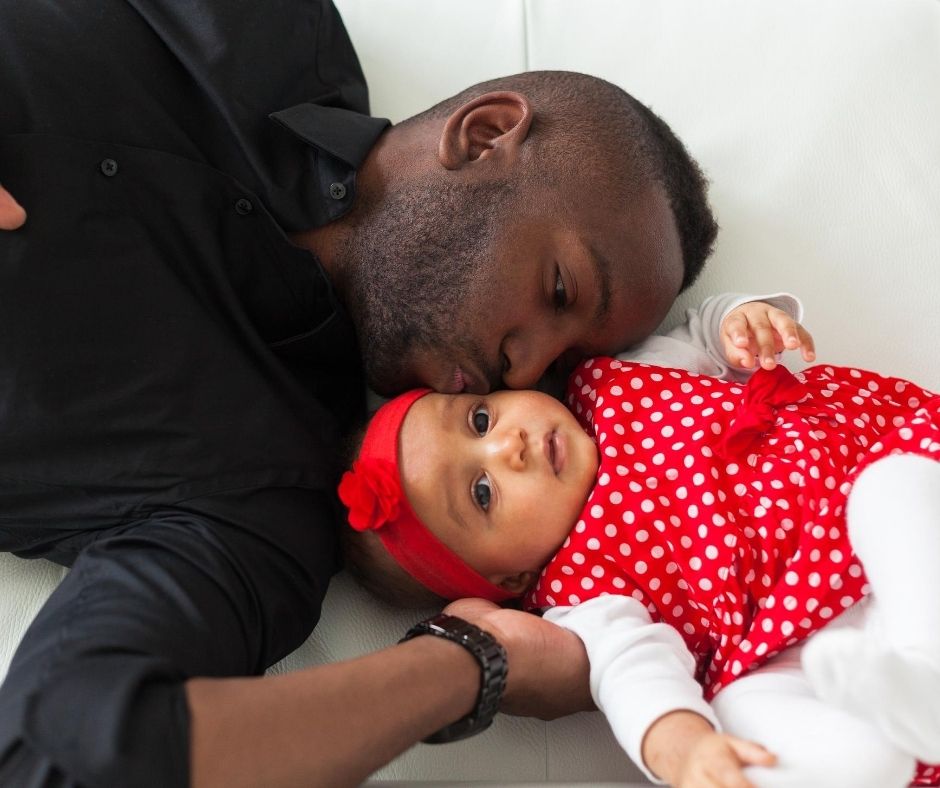
Eats on Feets especially acknowledges the need of Black communities for breastfeeding and breastfeeding support as well as the need for healing historical trauma so as to diminish racial and health disparities.
Black lactating parents have unique barriers. Their generational breastfeeding history is complex and trauma-filled. Black women were wet nurses in slavery, being forced to breastfeed and nurture the slave owners' children, often to the detriment of their own children. This has created and continues to create barriers to breastfeeding and milksharing among Black families.
Community-acquired breastmilk, when needed, can help diminish racial disparities in breastfeeding rates and can improve health outcomes. As is our purview, we will continue to advocate for equitable access to human milk for the health of babies. We are aware that representation matters. Eats on Feets represents families of color in memes and graphics on our network pages, and we highlight the disparities, as well as the celebrations, of BIPOC during Black Breastfeeding Week (8/25-31) and Native Breastfeeding week (8/9-15).
We are committed to the continued education within our network on issues of equity, anti-racism, and reproductive justice, making resources available to all our volunteers.
Monday, October 21st 2013
American Academy of Pediatrics Study Unwittingly Validates "Four Pillars of Safe Breastmilk Sharing"
By Maria Armstrong and Shell Walker Luttrell, Founders of Eats on Feets.
***Eats on Feets is referenced this week in a study published by the American Academy of Pediatrics (AAP) entitled "Microbial Contamination of Human Milk Purchased Via the Internet". The authors purchased milk from two websites which sell breastmilk to explore the potential for contamination. Results showed of the 101 purchased samples from the internet and shipped in various ways and distances, compared to 20 rejected milk bank samples, two classes of bacteria had statistically higher growth. The viral content was not significant. The following is an elaboration on the response requested by media outlets.***
Eats on Feets is uniquely dedicated to safe, ethical, and informed breastmilksharing between families. Eats on Feets also fervently opposes the selling of breastmilk. It is our firm belief that the selling and buying of breastmilk carries undue medical and ethical risks.
Bios
Shell Walker Luttell is a farmer and a midwife who lives in Arizona with her husband, six children, numerous farm animals, and visiting wildlife of all species.
Maria Armstrong is the mother of 4 and a doula serving the Portland, OR Metro Area and Vancouver, WA. Maria has a keen eye for research, a strong affinity for personal agency as well as autonomy, and is a strong advocate for families wherever she finds herself.
Saturday, May 25th 2013
What do CMAJ, Midwifery Today, Pubmed and CAPPA have to do with Eats on Feets?
By Maria Armstrong, Founder of Eats on Feets
Eats on Feets... First, why do I choose to volunteer at Eats on Feets? I am not a milksharing mother; I don't plan on being a milksharing mother in the future. I am all done with babies… of my own that is. My breastfeeding days are over and are a fond memory of a growingly distant past. I nursed my babies well past the AAP's minimum recommendation of breastfeeding for at least one year. I never even had any problems.
No, my interest in milksharing, and in Eats on Feets specifically, comes from my work and passion: being a birth doula. Unfortunately, I have had clients who had supply issues for various reasons, and it was a frustrating experience to see them having formula as their only recourse, whether short term as the issues were being resolved, or long term in case of unresolvable issues. Formula simply is not as health giving as breastmilk is. It did not occur to me however that mothers would want milk from another mother except via milk banks and thus for medically indicated reasons, nor did I know the birth community well enough to realize that some midwives may have known lactating mothers who had milk to share.
After one such experience yet again, I ran into Shell Walker (now Shell Luttrell), a midwife in Phoenix, AZ. I "met" her on, yes, Facebook, this awesome social networking medium. Shell had an active and local milksharing community going on called Eats on Feets, and the idea of having more communities like that all over the world inspired many of us. It seems to me now that all it took was one evening of brainstorming with a few people and Eats on Feets, the grassroots milksharing network, was born. I set up the Oregon chapter that same night, and it quickly took off, growing to 100 likers in a couple of days.
With the unexpected rapid growth of this network however, and the eagerness with which mothers were jumping on milksharing, also came the question about safety. How safe was it, really, when the milksharing happened outside of your own [Shell's] direct midwifery community? Mothers were asking questions about expressing, storing, shipping, feeding options, bacteria, screening, blood tests, mitigating diseases with pasteurization, and much more. We needed answers; parents needed answers.
Shell and I, as well as a handful of dedicated volunteers, poured ourselves over the information available to us and we quickly realized that we needed to make all this information more accessible, to both parents and professionals. There was so much to read, analyze, research and gather that we felt this was an impossible task for any, often sleep deprived, new parent to do, especially in acute need situations. We also wanted to make the information more easily available to medical, birth and lactational professionals, so that they could support community based breastmilk sharing and their clients or patients.
In the end, it took countless hours, a couple of all-nighters, days of missed work from daytime jobs, and several months to get our heads around all the information. We also talked to scientists, doctors (one of them using donor breastmilk for his grandchild from within his community), researchers, the very people involved with the studies we were reading about, always checking and double checking that we had it right. At times, steam came off of the Google document where we collaborated; some virtual doors were slammed. It was hard, hard work and crazy times.
Not only that, but as we researched, we discovered that some of our long held opinions and assumptions about certain issues like screening and pasteurization were inaccurate. Yikes! There was no way to go back and correct ourselves everywhere we had gone on record with some of these inaccuracies. However, the Canadian Medical Association Journal had published a news article earlier that year (Milk Sharing: Boon or Biohazard. 2011) for which Eats on Feets was interviewed, and considering the scope of the journal, we decided that it was important to send them a correction. Thankfully, it was published as a response to the article.
Finally, finally, out of the extensive research that we did, "The Resource for Informed Breastmilk Sharing" was created. This resource is truly unique in its kind. It is a searchable database, containing all the current information and research on breastmilk sharing, its safety concerns and informed choice process. It is complete with references, links, and official recommendations. This resource is continuously scrutinized and updated by volunteers in the medical, lactating and research community.
Out of our research, and the writing of our resource, came Shell's easy to understand and implement concept of the 4 pillars of safe breastmilk sharing: Informed choice, donor screening, safe handling and, if needed, pasteurization. These four pillars were elaborated on in our article "The Four Pillars of Safe Breastmilk Sharing," which was written for and published in the spring 2012 edition of Midwifery Today Magazine. This article is now also cited in PubMed!
But it doesn't stop there: "The Four Pillars of Breastmilk Sharing," as well as an excerpt from the article, are also being used and cited in CAPPA's recently released document for perinatal professionals, called "Milk Sharing and Perinatal Professionals" by Laurel Wilson, IBCLC, CLE, CCCE, CLD, CAPPA Executive Director of Lactation. In it, Laurel Wilson writes that "parents considering peer-to-peer milk sharing should follow the '4 Pillars of Safe Breastmilk Sharing.'" [emphasis added]
Now, this is really why I am with Eats on Feets specifically, and what excites me the most personally, aside from babies getting breastmilk: Not only has Eats on Feets become a leading resource in providing safety information and setting a standard for community based breastmilk sharing, Eats on Feets is also influencing and supporting changes in breastmilk sharing policy. From a correction to the CMAJ to Midwifery Today, Pubmed and CAPPA, we have made a long and fruitful journey. We have become a reference on other people's documents and guidelines!
And we are not done! There is so much to do still; there are so many plans, ideas and hopes. As we grow, we are attracting people in the research field who want to research methodologies for safe milk sharing. We want to look into education opportunities and collaborate with health professionals who have a direct impact on the most vulnerable members of our society so as to normalize community breastmilk sharing. I cannot wait to see what the future brings!
I absolutely love being part of such a wonderful grassroots movement as Eats on Feets! I am so grateful for everything that I have learned these past few years, and for the deep relationships made. But most of all, I thank everyone who is involved in making breastmilk normal for every baby! Nowadays, when I have a client who has supply issues, I can offer an alternative to formula: I can offer to find someone who can safely provide her baby with species appropriate nutrition. And that is HUGE.
- CMAJ: Milk Sharing: Boon or Biohazard?
- Midwifery Today: The Four Pillars of Breast Milk Sharing
- Pubmed citation
- Cappa: Milk Sharing and Perinatal Professionals
Bio
Maria Armstrong is the mother of 4 and a doula serving the Portland, OR Metro Area and Vancouver, WA. Maria has a keen eye for research, a strong affinity for personal agency as well as autonomy, and is a strong advocate for families wherever she finds herself.
Wednesday, June 20th 2012
Midwifery Today Article
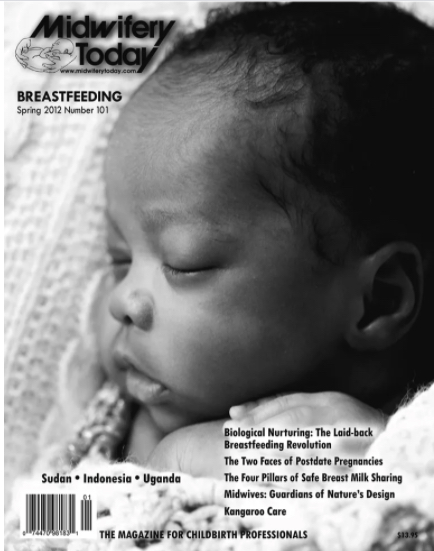
The Four Pillars of Safe Breast Milk Sharing, an article written by Shell Walker Luttrell and Maria Armstrong, is featured the 2012 Spring edition of Midwifery Today.
Sunday, November 13th 2011
Making a Profit on Breast Milk
By Shell Walker Luttrell, Founder of Eats on Feets
In response to the many stories about how unsafe 'informal' breastmilk sharing is and how people should use 'formal' milk banks.
Community based milksharing is an affordable, viable and important option that should be protected and furthered, not stymied.
Eats on Feets facilitates a world-wide network of parents and professionals who have made the informed choice to share or support the sharing of breastmilk. Eats on Feets was the first network on Facebook to do so and has a history of rigorous dedication to the furthering of milk sharing information.
The Eats on Feets 4 pillars support the safe sharing of breastmilk.
- Informed Choice
- Understanding risks and benefits, of all infant and child feeding methods
- Know thy source
- Donor Screening
- Donor self-exclusion for, or declaration of, medical and social concerns
- Communication about lifestyle and habits
- Screening for HIV I and II, HTLV I and II, HBV, HCV, Syphilis, and Rubella
- Safe Handling
- Inspecting and keeping skin, hands, and equipment clean
- Properly handling, storing, transporting, and shipping breastmilk
- Home Pasteurization
- Heat treating milk to address infectious pathogens
- Informed choice of raw milk when all donor criteria are met
Bio
Shell Walker Luttrell is a farmer and a midwife who lives in Arizona with her husband, six children, numerous farm animals, and visiting wildlife of all species.
Volunteering for an Eats on Feets chapter
Volunteering for an Eats on Feets chapter is a wonderful and rewarding opportunity to support families and their babies. It also offers an opportunity to connect with the midwives, doulas, lactation consultants, nurses, and other professionals in your area to help spread the word about safe milksharing.
What do volunteers do?
Volunteers work in teams to maintain and foster their local Eats on Feets community spaces. We have guidelines in place that support safe and informed milksharing and we monitor our spaces so they stay within these parameters.
Volunteers also regularly share information to inform our community members about safe milksharing practices or to remind them to check their freezers for example.
Some volunteers are moderators of their Community Group, while others manage their local Page. Some do both. Some take multiple Pages under their wing, some support and guide multiple teams of volunteers, and some answer media inquiries. There is much room for growth and fulfilment!
Volunteering for Eats on Feets also means working as a team and being comfortable communicating with each other. Our volunteers form a community as well and we work together in various spaces to be creative, collaborative, and effective. Clear and direct communication is extremely important to us.
Local connections
It is wonderful if an Eats on Feets volunteer is in the position of networking with local parents and perinatal professionals, is tied into their local community, and is able to make real life connections to spread the word about safe milksharing. Eats on Feets operates locally and Chapters are typically run by local volunteers. Knowing or getting to know likeminded people allows for the network to grow and flourish which means that more babies will obtain human milk. We have many resources available for this purpose!
Access and safety
Something to remember is to let the families work things out themselves. The community belongs to them. You may never know who is getting whose milk. Eats on Feets does not keep lists nor tries to organize and connect donors and recipients. Less is more. Families are responsible for matching themselves up as well as for their milksharing outcomes.
For questions about safe milksharing, please refer to our Resource for the Informed Sharing of Human Milk which contains the available safety information that offers parents, caretakers, and professionals the tools to make informed decisions about milksharing.
Thank you for your interest!
If you would like to volunteer for the Eats on Feets community in your area, message your local chapter or email us so we can send you an application!
Tuesday, March 15th 2011
Response to "Milk sharing: Boon or biohazard," published in the Canadian Medical Association Journal
CMAJ: Milk Sharing: Boon or Biohazard?
By Maria Armstrong, Founder of Eats on Feets
Dear Lauren,
Please allow me to post some corrections.
Routine prenatal testing is inconclusive when it comes to safe milk sharing. It does not address every disease milk is typically screened for, and testing is primarily done at the beginning of pregnancy. Many opt out of HIV screening. Both HMBANA and UKAMB recommend testing every 3-6 months for HIV, HTLV, HBV, HCV, Syphilis and Rubella. These guidelines are followed by most milk banks.
Bio
Maria Armstrong is the mother of 4 and a doula serving the Portland, OR Metro Area and Vancouver, WA. Maria has a keen eye for research, a strong affinity for personal agency as well as autonomy, and is a strong advocate for families wherever she finds herself.
Tuesday, September 23rd 2014
Protecting PAMS Participants' Privacy
Group Asks Participants to Share Private Information
By Angie B. Bond, PhD
Private Arrangement Milk-Sharing
Foundation of Privacy Rights
The establishment of protections for personally identifiable information security in healthcare and human subjects research through the Health Insurance Portability and Accountability Act (HIPAA) establishes rights of control, disclosure, and informed consent for the collection and use of said information for the person the information pertains to (United States Department of Health and Human Services [HHS], 2013). Protection of this information becomes increasingly more complicated when electronic records are involved, transmission or sharing of protected information occurs, or when the use of information is for purposes secondary to the collecting practitioner use in treatment (Schweitzer, 2011). Difficulty or complexity in maintaining the integrity of personally identifiable information is accepted as a challenge, however, sanctions against violation of rights concerning health and personal information exist and are a significant financial and criminal liability with additional liabilities potentially levied on a state by state basis (Schweitzer, 2011; Pritts, 2007). In order to ensure that every effort is made to protect both the subject of the information and the organization or researcher collecting the information for use in research or providing care, Institutional Review Boards Human Subjects Committees (IRBs) and specific requirements for Risk Analysis and Management within all health organizations, programs, and clinics (Nass et al., 2009).
How is PAMS affected?
Private Arrangement Milk Sharing (PAMS) is a complex practice. Part of that complexity arises from the frequent nature of the agreements being "Contract Implied in Fact" arrangements involving individually identifiable information and/or the exchange of health information. A Contract Implied in Fact "Consists of obligations arising from a mutual agreement and intent to promise where the agreement and promise have not been expressed in words. Such contracts are implied from facts and circumstances showing a mutual intent to contract, and may arise by the conduct of the parties. A contract implied in fact is a true contract" and is entered into upon exchange of milk in a PAMS relationship. The exchange of milk in PAMS fulfills requirements of conduct illustrating "an unambiguous offer, unambiguous acceptance, mutual intent to be bound, and consideration." A critical part of this contract obligation is the use of the donated milk and information regarding health and lifestyle of the donor obtained during screening be used for the purpose of providing for the recipient infant/family and that infant/family alone, and this is supported by the claims of each of the major PAMS networks.
All of the major milksharing networks make clear their stance to be uninvolved in the specific between party agreements involved in PAMS including questionnaires and screening tools ( Eats On Feets), asserting that all individuals take complete responsibility for outcomes of milksharing as individuals ( Human Milk 4 Human Babies). This explicit maintenance of non-participation ensures that as networks, they are not included in provisions requiring adherence to HIPAA. These organizations provide description of their belief that information collected for research or analysis should not be undertaken by the networks, presumably for both philosophical and practical conflict of interest reasons. Encouragement to violate this foundation of expectation by soliciting third party information is counter productive to the specified intent and spirit of milk sharing as a private arrangement strictly between the donor and recipient, and undermines the security in providing information confidentially. So who is intentionally asking that this expectation and potentially contractual obligation to honor privacy in the PAMS agreement be violated?
MIDAS
The Milksharing Incident Database and Survey (MIDAS) is described on their website as "…a grassroots public health program created by World Milksharing Week."* Neither the survey nor the incident reporting options provides an informed consent document, indication of data security, intended use, authority to collect such data, de-identification procedures, or information regarding data security and storage. There is no IRB approval for any of the actions undertaken by this organization. In the frequently asked questions tab of the website, it is stated that there is absolutely no follow up on any information provided, and that all information is provided anonymously. On the same page, follow up is discussed as occurring in "severe and very severe" instances, with a medical professional that MIDAS chooses. No information is provided regarding vetting of medical professionals, authority for them to contact respondents, and certainly not to contact individuals who's personal information was obtained through a third party without consent. So, if the reporting is anonymous, how does the follow up occur? The answer is likely that this website is an integrated WordPress account, as it is hosted by Bluehost, and WordPress has the capability of tracking the IP addresses of users who interact with websites. Not particularly anonymous, or secure.
Necessity?
No evidence or foundation based on the current level of knowledge concerning PAMS is provided by the creators of MIDAS. The efforts are redundant, as my own research and that of several other teams operating in the US and Canada are collecting practice information and participant beliefs. These research endeavors are being conducted under approved IRB circumstances, and with full disclosure to all participants. Considering this information is being collected in such a way that it cannot be used for legitimate research, it is likely that such a site poses more harmful potential than benefit for any efforts to generate policy and evidence regarding PAMS.
Closing Thoughts
The PAMS community and participants are operating under very biased and intensive scrutiny from existing health authorities. Concerns about the cavalier attitude of those participating and the presumed ignorance of those involved is frequently discussed. A site clearly not manned by an experienced researcher or data manager, seeking information from third parties without any right to do so and potentially in violation of individual state and federal regulations regarding protected information and contract law, and without recourse for those who may be seriously wronged in this process certainly does not refute these views of PAMS. It is deeply disturbing to me, personally, to see otherwise well respected researchers who would certainly be expected to understand their inability to be associated with such an undertaking per their involvement with research institutions already are being named as partners in this endeavor through World Milksharing Week.
* The milksharing network Human Milk 4 Human Babies and Modern Milksharing are included in the committee responsible for the creation of MIDAS. This involvement and endorsement is in direct opposition to stated intentions to stay removed from involvement and to support individual accountability of participants on their networks and sites.
References
Nass, S. J., Levit, L. A., Gostin, L. O. (2009). Beyond the HIPAA privacy rule: Enhancing privacy, improving health through research. Washington, D.C: National Academies Press.
Pritts, J.L. (2007) Federal efforts to impose uniformity on state healthcare laws. Health Law and Policy. Vol. 20 (2). Pp 20-23.
Schweitzer, E. J. (2012). Reconciliation of the cloud computing model with US federal electronic health record regulations. Journal of the American Medical Informatics Association : JAMIA, 19(2), 161-165. doi:10.1136/amiajnl-2011-000162
Bio
Angie Bowen Bond lives in Arizona with her husband and her 3 children. She serves diverse communities with fertility, gestation, and lactation care.